
Energy Savvy: Discover Low Energy Air Conditioning Solutions
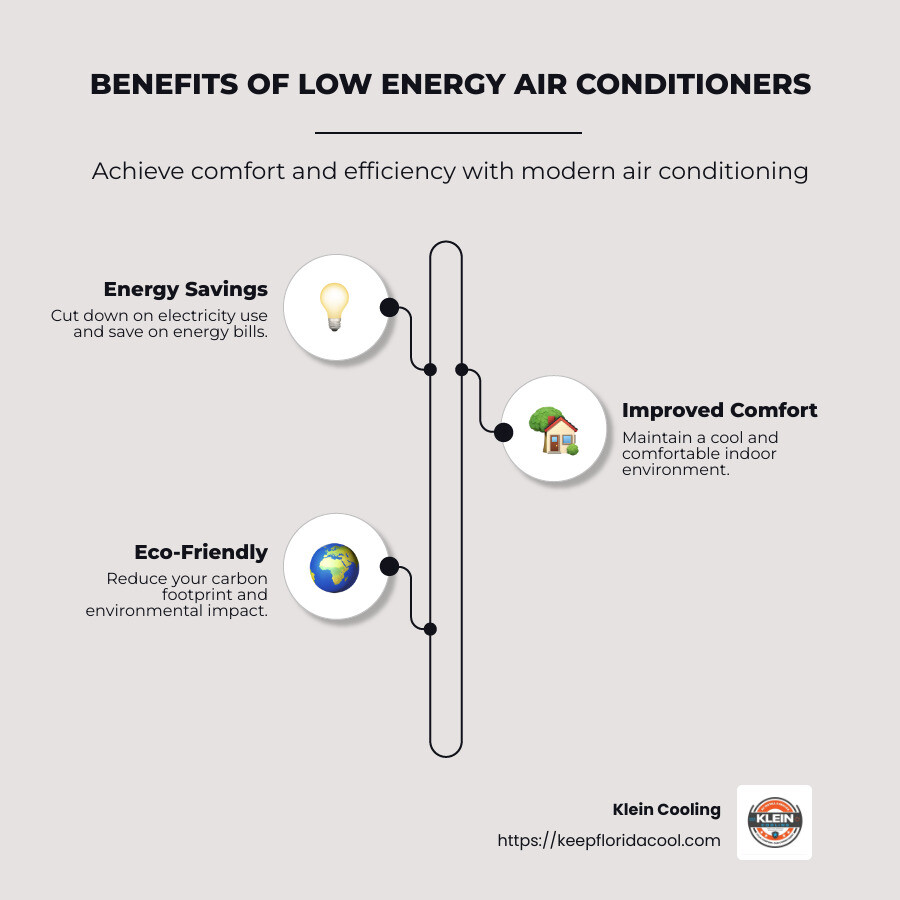
Low energy air conditioners are the key to achieving energy efficiency, ensuring comfort, and controlling costs in today’s homes. These innovative systems blend modern technology with efficient design to keep your living space cool without sending your energy bills through the roof. Here’s a quick glance at their benefits:
- Energy Savings: Reduce electricity use and keep bills down.
- Improved Comfort: Maintain cool and comfortable indoor temperatures.
- Eco-Friendly: Minimize environmental impact by lowering emissions.
In an era where energy efficiency is more important than ever, the right air conditioning system can make all the difference. Not only do they help in reducing energy costs, but they also improve indoor comfort by efficiently managing temperatures and humidity levels. As Sorin Grama, CEO of Transaera, noted, “Humidity drives comfort more than temperature,” and today’s advanced AC systems keep both in check.
For those in Palm Coast, FL, like John, a retired veteran seeking reliable HVAC services, energy-efficient air conditioners offer the perfect blend of comfort and cost-effectiveness. By making smart choices in air conditioning, you’ll ensure a more comfortable home environment throughout the year.
Terms related to low energy air conditioners:
– energy efficient air conditioning systems
– most efficient way to air conditioner home
– top energy efficient air conditioners
Understanding Low Energy Air Conditioners
When it comes to low energy air conditioners, understanding key efficiency metrics like SEER and EER ratings, along with ENERGY STAR certification, is crucial.
SEER and EER Ratings
SEER (Seasonal Energy Efficiency Ratio) and EER (Energy Efficiency Ratio) are two important metrics that help you gauge how efficiently an air conditioner uses energy.
-
SEER measures the efficiency of an AC unit over a typical cooling season. A higher SEER rating means better energy efficiency. For instance, a unit with a SEER rating of 16 is more efficient than one with a rating of 13.
-
EER focuses on efficiency at a specific outdoor temperature (usually 95°F). This rating is particularly useful for those living in consistently hot climates.
Choosing an air conditioner with high SEER and EER ratings ensures you’re getting a system that cools effectively without wasting energy.
ENERGY STAR Certification
Look for the ENERGY STAR certification when selecting an air conditioner. This label indicates that the unit meets strict energy efficiency guidelines set by the U.S. Environmental Protection Agency. An ENERGY STAR certified AC can save you up to 30% on your energy bills compared to non-certified models.
These certifications and ratings are not just about saving money; they also contribute to a healthier environment by reducing greenhouse gas emissions.
Real-World Impact
In the heatwave-stricken cities of Europe, like Seville and Lisbon, energy-efficient air conditioners have become a necessity. During a recent heatwave, Seville saw a 23% increase in AC usage, highlighting the need for systems that can handle increased demand without skyrocketing energy costs.
For residents in Palm Coast, FL, where summers can be particularly sweltering, opting for low energy air conditioners with high SEER and EER ratings and ENERGY STAR certification is a smart move. These systems not only lower electricity bills but also improve indoor comfort by efficiently managing temperature and humidity levels.
Types of Low Energy Air Conditioners
When considering low energy air conditioners, it’s important to understand the different types available, each with its own advantages and disadvantages. Let’s break down four popular options: window units, portable units, ductless mini-split systems, and inverter air conditioners.
Window Units
Window air conditioners are a common choice for those seeking an affordable, easy-to-install option.
- Pros: These units are generally inexpensive, easy to find, and simple to install. They drain to the outside and don’t require any floor space.
- Cons: While they are portable to some extent, moving them can be cumbersome. They also block windows and may not fit all window types. Insulation can be a challenge, leading to potential energy loss.
Portable Units
Portable air conditioners offer flexibility by allowing you to move them from room to room.
- Pros: They don’t occupy a window, making them a good choice for rooms with unique window configurations. They’re also easy to relocate.
- Cons: Despite being labeled “portable,” these units need to vent to the outside, which can limit mobility. They are often less efficient and noisier than window units and may require regular draining of a condensation tank.
Ductless Mini-Split Systems
Ductless mini-split systems are an excellent choice for homes without existing ductwork.
- Pros: These systems are energy-efficient and quiet. They consist of a wall-mounted interior unit and an exterior compressor, making them less intrusive than window units. Installation is simpler compared to traditional central air systems.
- Cons: Although less expensive than full ducted systems, they can still be costly to install. The outdoor unit can be large and visually intrusive.
Inverter Air Conditioners
Inverter air conditioners stand out for their ability to adjust the speed of the compressor motor to regulate temperature efficiently.
- Pros: These units use less energy by maintaining a constant temperature without turning on and off repeatedly. They are highly efficient and provide consistent cooling.
- Cons: The initial cost is higher compared to non-inverter models due to the advanced technology involved. However, the energy savings over time can offset this initial expense.
Choosing the right type of air conditioner depends on your specific needs, budget, and the layout of your home. Each option offers unique benefits, and understanding these can help you make an informed decision.
Features to Look for in Low Energy Air Conditioners
When shopping for low energy air conditioners, you’ll want to focus on features that maximize energy savings without sacrificing comfort. Here are some key features to consider:
Programmable Settings
Programmable settings allow you to set your air conditioner to run at specific times. This means you can have it turn off when you’re not home and start cooling before you return. Such scheduling can significantly reduce energy use. Even basic models now come with digital displays to make this easy. Central air systems often offer even more flexibility.
Energy-Saving Modes
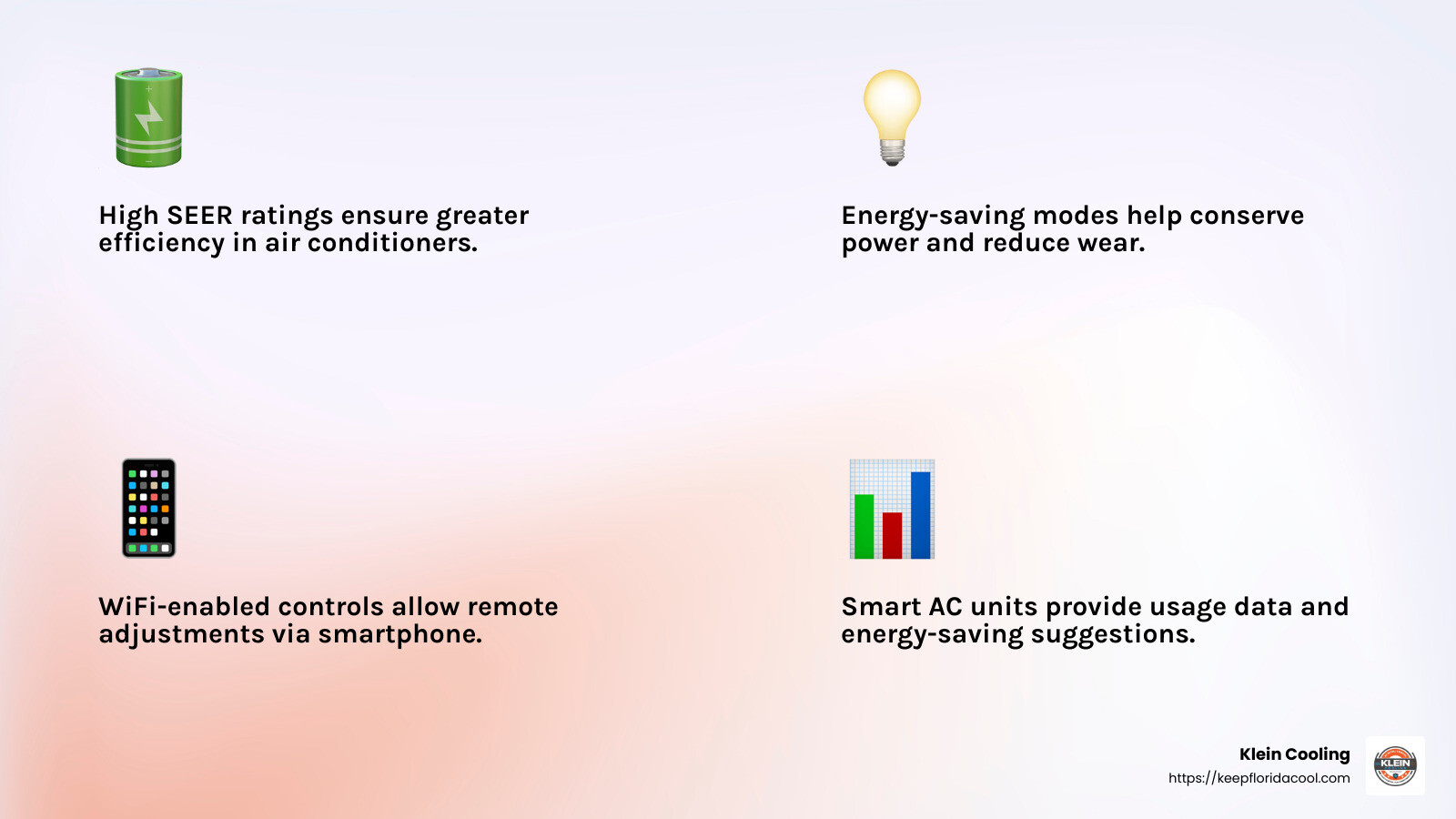
An energy-saving mode is a must-have feature. This setting ensures the unit turns off the compressor and fan once the desired temperature is reached. By doing so, it conserves energy and reduces wear on the system. Look for models with high SEER and EER ratings to ensure maximum efficiency.
WiFi-Enabled Controls
For those embracing smart home technology, WiFi-enabled controls are a game-changer. These allow you to adjust settings remotely using your smartphone or integrate with devices like Alexa or Google Assistant. Smart air conditioners can provide detailed usage data and offer suggestions for reducing energy consumption, making them a powerful tool for energy savings.
Incorporating these features into your air conditioning system can lead to substantial energy savings and a more comfortable home environment. As you explore options, keep these features in mind to ensure you’re investing in a unit that meets your needs and helps lower your energy bills.
Top Low Energy Air Conditioning Solutions
When it comes to keeping your home cool without breaking the bank on energy bills, low energy air conditioners are the way to go. Let’s explore some top solutions that can help you achieve comfort and savings.
Modulated Air Conditioners
Modulated air conditioners are a smart choice for those looking to optimize energy use. Unlike traditional units that operate at full blast or not at all, these systems adjust their cooling output based on the current need. This means they can run at a lower capacity when less cooling is required, saving energy and reducing wear and tear. This adaptability not only improves efficiency but also maintains a consistent indoor temperature.
Variable-Speed Systems
Variable-speed systems are another excellent option for energy-conscious homeowners. These systems can adjust their speed to match the cooling demand precisely. By doing so, they use less electricity compared to single-speed units. The result is a more balanced temperature throughout your home and less frequent cycling on and off, which can prolong the life of your air conditioner. According to research, units with high SEER ratings often incorporate variable-speed technology, making them a top pick for energy savings.
Solar Air Conditioning
For those who want to take energy efficiency to the next level, solar air conditioning is an innovative solution. These systems use solar panels to power the air conditioner, significantly reducing reliance on grid electricity. While the initial investment can be higher, the long-term savings and environmental benefits are substantial. Solar air conditioning is particularly effective in sunny regions like Palm Coast, FL, where solar energy is abundant. This option not only cuts down your energy bills but also reduces your carbon footprint, making it a win-win for both your wallet and the planet.
By considering these top low energy air conditioning solutions, you can enjoy a cool home while keeping energy costs in check. As you explore your options, think about your specific needs and how each solution can fit into your lifestyle and budget.
Frequently Asked Questions about Low Energy Air Conditioners
What type of air conditioner uses the least electricity?
When it comes to minimizing electricity usage, ductless mini-split systems are often the go-to choice. These systems are highly efficient because they allow you to cool specific areas of your home, reducing unnecessary energy consumption. Inverter air conditioners are also excellent for low electricity usage. Unlike traditional models that constantly turn on and off, inverter ACs adjust their speed to maintain the desired temperature, using only the energy needed at any given time.
Another key factor in choosing a low-energy air conditioner is the SEER (Seasonal Energy Efficiency Ratio) rating. The higher the SEER rating, the more efficient the unit. Air conditioners with high SEER ratings are designed to use less electricity while providing the same level of cooling comfort.
Which AC is best for a low electricity bill?
If you’re looking to cut down on your electricity bill, consider an air conditioner with a 5-star rating. This rating indicates superior energy efficiency, meaning the unit will consume less power over time. Inverter ACs are particularly effective for keeping electricity bills low due to their ability to modulate power use based on cooling demand.
Moreover, ductless mini-split systems offer targeted cooling, which means you only use energy to cool the rooms you are using. This targeted approach can lead to significant savings on your energy bill. Always look for units with the ENERGY STAR certification to ensure you’re getting a product that meets or exceeds energy efficiency standards.
How to choose the right size air conditioner?
Selecting the right size air conditioner is crucial for energy efficiency. A unit that’s too large will cool the room quickly but won’t effectively remove humidity, leading to a damp, uncomfortable environment. Conversely, a unit that’s too small will struggle to cool the space, using more energy than necessary.
To find the right size, consult a BTU (British Thermal Unit) chart. This chart helps you determine the cooling capacity needed for your specific space. Measure the square footage of the area you want to cool and match it with the appropriate BTU rating. This ensures your air conditioner runs efficiently without wasting energy.
Additionally, consider the tonnage of the air conditioner. Tonnage refers to the unit’s cooling capacity, with higher tonnage indicating a larger capacity. Choose a tonnage that aligns with your space requirements to optimize both comfort and energy use.
By understanding these factors, you can make an informed decision and choose a low energy air conditioner that suits your needs while keeping your electricity bills in check.
Conclusion
At Klein Cooling, we are committed to providing expert HVAC services that prioritize energy savings and comfort for your home. Our team in Palm Coast, FL, understands the importance of choosing the right air conditioning system that not only cools efficiently but also reduces your energy bills.
By offering a range of low energy air conditioners, including ductless mini-split systems and inverter air conditioners, we help you make informed choices that align with your energy-saving goals. Our systems are designed to provide optimal cooling with minimal electricity usage, ensuring that you enjoy a comfortable indoor environment without compromising on efficiency.
Energy savings are more than just a trend; they are a necessity for a sustainable future. With our expertise, we guide you in selecting air conditioners with high SEER ratings and ENERGY STAR certifications, which are indicators of superior energy performance.
As a family-owned business, we take pride in combining our core values of honesty and integrity with professional HVAC solutions. We offer first responder, military, and senior discounts, ensuring that our services are accessible to all members of our community.
Explore our comprehensive HVAC services, including installation, repair, and maintenance, to keep your air conditioning system running smoothly all year round. For more information, visit our additional services page to find how we can help you achieve energy efficiency and comfort in your home.
Together, let’s create a cooler, more energy-efficient future with Klein Cooling!