
Business Cool: Commercial AC Installation Roundup
Commercial AC installation is a crucial step in ensuring a comfortable and energy-efficient environment in any commercial building. For business owners and facility managers, understanding the basics of installing these systems can make a significant difference in terms of comfort, energy savings, and overall productivity.
-
What is Commercial AC Installation?
- The process involves setting up air conditioning units to meet the cooling needs of large spaces, like offices, schools, and other commercial buildings.
-
Why is it Important?
- Comfort: Ensures a pleasant indoor climate for employees and customers.
- Energy Efficiency: Proper installation can lead to significant energy savings.
- Productivity: A well-cooled environment boosts employee performance.
-
Key Considerations:
- Building size and layout.
- Local climate conditions.
- Type of system (e.g., packaged rooftop units, split systems).
-
Maintenance: Regular upkeep is essential to extend the unit’s lifespan and maintain efficiency.
In the busy commercial spaces of Palm Coast, FL, maintaining an efficient and reliable HVAC system is more than a necessity—it’s a strategic advantage. By ensuring well-regulated indoor temperatures, businesses can significantly improve the comfort and well-being of their occupants, ultimately contributing to improved productivity and reduced energy costs.
Ensuring that your commercial building is equipped with a top-notch AC system isn’t just about staying cool; it’s about embracing a sustainable future with lower energy bills and optimal performance.
Know your Commercial AC installation terms:
– Air conditioning service Florida
– Quality air conditioning service
– AC unit repair near me
Understanding Commercial AC Systems
When it comes to commercial AC installation, choosing the right system is key to achieving a comfortable and energy-efficient environment. Let’s explore the main types of systems available and what makes each unique.
Split Systems
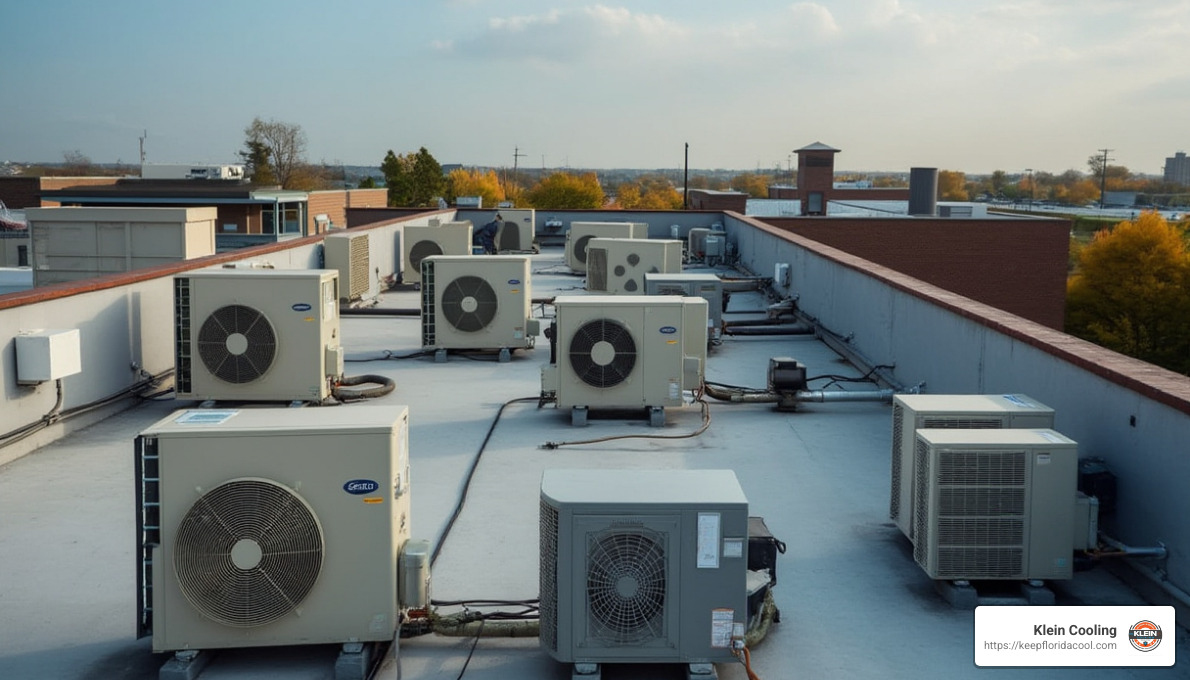
Split systems are popular in the U.S. because they offer flexibility and individual control over air temperatures. These systems have both indoor and outdoor components. The outdoor unit typically houses the compressor and condenser coil, while the indoor unit contains the air handler and evaporator coil. They’re ideal for smaller commercial spaces due to their ability to connect with existing ductwork. However, their installation might clutter rooftops if multiple units are needed.
Heat Pumps
Heat pumps are a type of split system that provides both heating and cooling, making them a versatile choice for year-round comfort. They work by transferring heat from the air: bringing it inside during winter and expelling it outside in summer. This dual functionality can be particularly beneficial in regions with mild climates, offering an efficient and environmentally friendly alternative to traditional heating and cooling systems.
Packaged Air Conditioners
Packaged air conditioners, often seen as Rooftop Units (RTUs), combine all components—compressor, condenser, evaporator, and fan coil—into a single outdoor unit. These systems are space-efficient and powerful enough to cool large commercial buildings. They also integrate a thermostat, simplifying temperature control. Their design helps maintain safe CO2 levels by using both inside and outside air, which also prevents the system from overworking on extreme temperature days.
Ductless Mini-Split Systems
Ductless mini-split systems offer flexibility and efficiency, especially in older buildings without existing ductwork. These systems consist of an outdoor unit connected to one or more indoor units via refrigerant lines. They provide targeted cooling, making them perfect for smaller offices or specific zones within a larger building. Mini-splits come in two configurations:
- Single Zone: Ideal for cooling one area, with a direct connection between the indoor and outdoor units.
- Multi-Zone: A single outdoor unit can connect to multiple indoor units, allowing for individualized temperature control in different areas.
Each of these systems has its advantages, whether it’s the energy efficiency of heat pumps or the ease of installation with ductless mini-splits. Selecting the right system depends on factors like building size, layout, and specific cooling needs. By understanding these options, businesses in Palm Coast, FL, can make informed decisions that improve comfort and efficiency.
Next, let’s explore the benefits of installing a commercial AC system, focusing on how it can improve comfort, energy savings, productivity, and air quality.
Benefits of Commercial AC Installation
Installing a commercial AC system offers several key benefits that can greatly improve your business environment. Let’s explore how these systems improve comfort, boost energy savings, increase productivity, and improve air quality.
Comfort
Comfort is crucial in any commercial space. A well-installed AC system ensures a consistent and comfortable temperature, which is essential for both employees and customers. Imagine walking into a shop on a scorching summer day and feeling a refreshing cool breeze. This immediate relief can make customers more likely to stay longer and return. For employees, a comfortable workspace means fewer distractions and a better focus on tasks.
Energy Savings
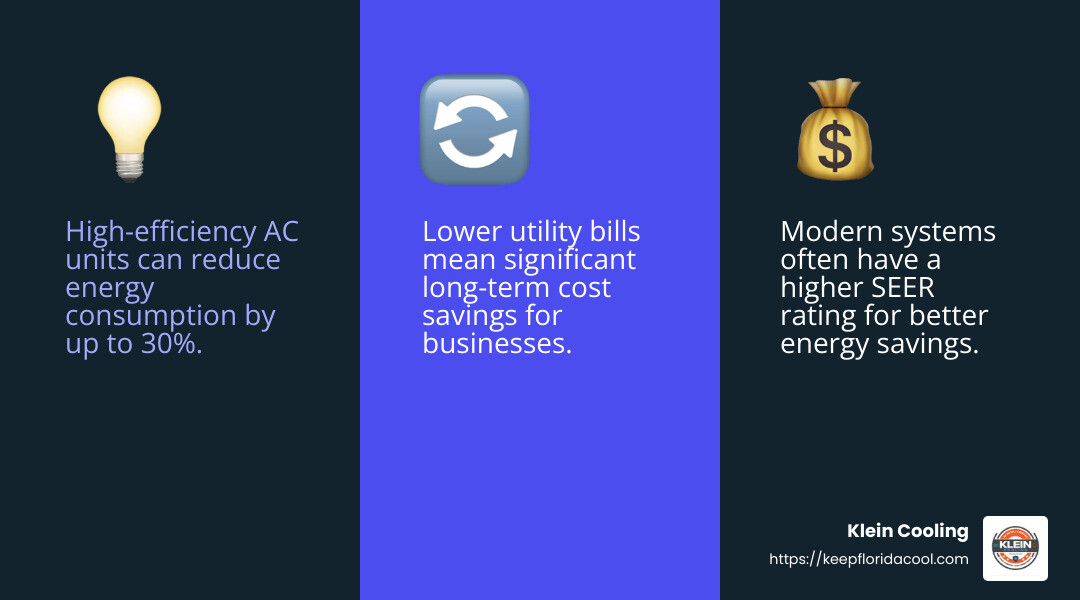
Modern commercial AC systems are designed with energy efficiency in mind. New systems often come with a higher Seasonal Energy Efficiency Ratio (SEER) rating, which means they use less energy to achieve the same cooling effect. This efficiency translates to lower utility bills, which can save businesses a significant amount of money over time. For example, a high-efficiency unit can reduce energy consumption by up to 30%, offering substantial savings in the long run.
Productivity
Temperature can have a direct impact on productivity. Studies have shown that employees are more productive in environments where the temperature is controlled and comfortable. Excessive heat can lead to fatigue and decreased concentration, while a cool and consistent temperature helps maintain alertness and efficiency. By investing in a reliable commercial AC system, businesses can create a more productive work environment.
Air Quality
Air quality is another important factor that a commercial AC system can improve. These systems filter out dust, allergens, and pollutants, ensuring that the air inside the building is clean and healthy. This is especially important in commercial spaces where many people gather, such as offices and retail stores. Improved air quality can reduce the spread of illnesses and create a healthier environment for everyone.
In summary, the benefits of installing a commercial AC system extend beyond just cooling. By enhancing comfort, reducing energy costs, boosting productivity, and improving air quality, these systems play a vital role in creating a better business environment.
Next, we’ll dig into the commercial AC installation process, including site surveys, ductwork installation, and system calibration.
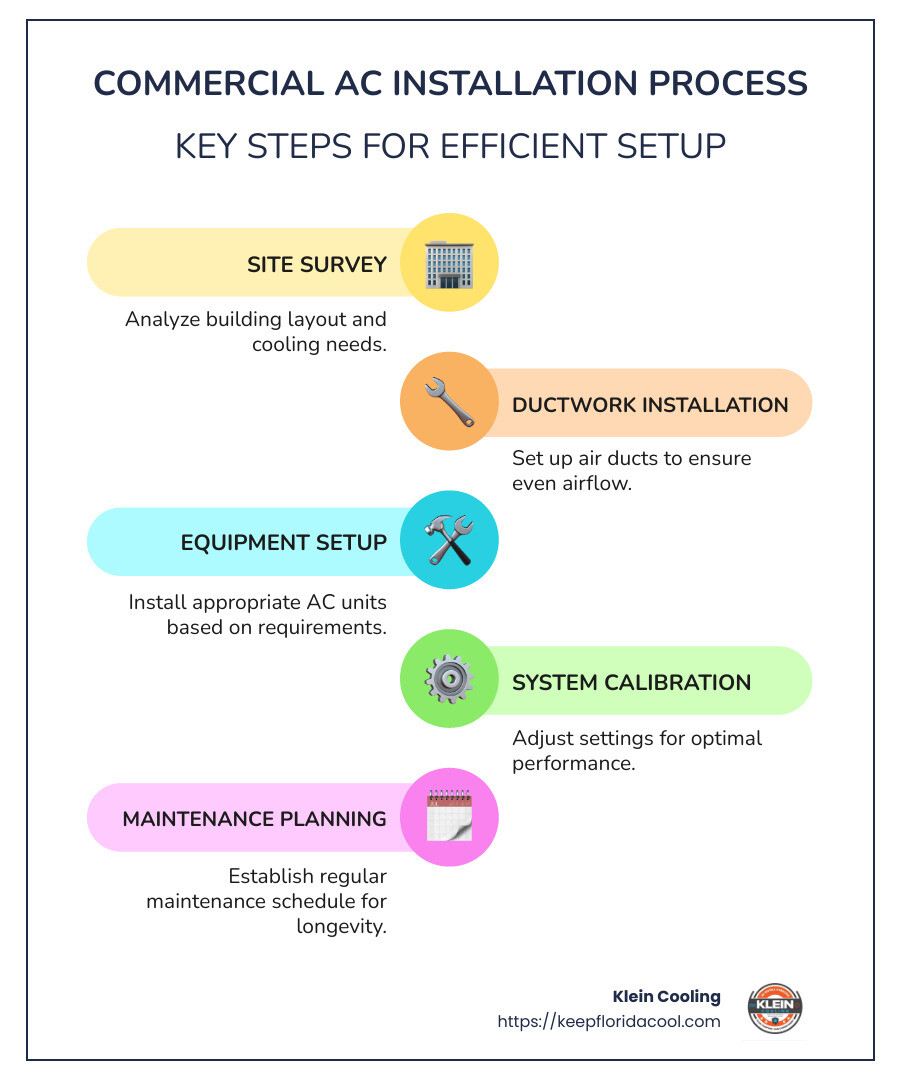
Commercial AC Installation Process
Installing a commercial AC system is a multi-step process that requires careful planning and execution. Here’s a simple breakdown of the key steps involved in this process:
Site Survey
The first step in the installation process is conducting a thorough site survey. This involves assessing the building’s layout, size, and specific cooling needs. The survey helps determine the best type of system for the space. For example, a large office might benefit from a split system, while a smaller retail store could opt for a ductless mini-split. The climate of Palm Coast, FL, is also considered, ensuring the system can efficiently handle local weather conditions.
Ductwork Installation
Once the type of system is decided, the next step is installing the ductwork. Properly sized and installed ductwork is crucial for the system’s efficiency. It ensures that cool air is distributed evenly throughout the building. Missteps in this stage can lead to energy loss and uneven cooling, so precision is key. This is why a qualified technician is essential for this part of the process.
Equipment Setup
After the ductwork is in place, the main equipment is installed. This includes setting up the air conditioning unit, connecting it to the ductwork, and ensuring all components are correctly positioned. Technicians will make sure all connections are secure and that the system is ready to operate. They might also install additional components like thermostats and control systems to improve functionality.
System Calibration
The final step is system calibration. This is where technicians test the system to ensure it operates at peak performance. They check airflow rates, temperature controls, and overall system efficiency. Calibration ensures that the system cools the space effectively without wasting energy. Regular calibration is also part of ongoing maintenance to keep the system running smoothly.
By following these steps, businesses can ensure their commercial AC installation is done right, leading to a comfortable and efficient environment. Up next, we’ll look at common issues and maintenance tips to keep your system in top shape.
Common Issues and Maintenance Tips
Even the best-installed commercial AC systems can face issues over time. Understanding these common problems and knowing how to maintain your system can save you a lot of hassle and money. Let’s explore some frequent issues and essential maintenance tips.
Refrigerant Leaks
Refrigerant leaks are a common problem in many AC systems. These leaks can lead to inefficient cooling and increased energy bills. Signs of a refrigerant leak include oil around valves, service ports, or AC connections. You might also notice the system failing to blow cool air.
Regular inspections can help catch leaks early. If you suspect a refrigerant leak, it’s crucial to contact a professional technician to fix it promptly. Delaying repairs can lead to more significant issues down the road.
Short Cycling
Short cycling occurs when your AC system turns on and off too frequently. This can be caused by thermostat issues, clogged filters, or refrigerant leaks. Short cycling not only wears out the system faster but also increases energy consumption.
To prevent short cycling, ensure your thermostat is functioning correctly and that your filters are clean. Regular maintenance checks can help identify and fix the root causes of short cycling before they cause more serious damage.
Dirty Filters
Dirty filters are another common issue that can affect your AC system’s performance. When filters get clogged, they restrict airflow, causing the system to work harder and use more energy. This can lead to higher utility bills and reduced system lifespan.
To keep your system running efficiently, change your filters regularly—ideally every quarter or even monthly during peak usage periods. Clean filters not only improve efficiency but also improve indoor air quality.
Regular Maintenance
Regular maintenance is key to preventing many of these common issues. A comprehensive maintenance plan includes checking the refrigerant charge, cleaning coils, and inspecting all electrical components. It also involves lubricating moving parts and ensuring all connections are secure.
Investing in regular maintenance can lead to fewer costly repairs, increased energy efficiency, and a longer lifespan for your system. Klein Cooling offers professional maintenance services to keep your system in top shape.
By addressing these common issues and following these maintenance tips, you can ensure your commercial AC system operates smoothly and efficiently. Up next, we’ll tackle some frequently asked questions about commercial AC installation.
Frequently Asked Questions about Commercial AC Installation
How much does a commercial air conditioning system cost?
The cost of a commercial air conditioning system can vary widely based on several factors. These include the size of the unit, the complexity of the installation, and the specific needs of your building. On average, you might spend anywhere from $3,000 to $10,000 or more for a basic setup. However, larger or more complex systems can cost significantly more.
Installation expenses play a big role too. This includes the cost of ductwork, electrical upgrades, and labor. It’s important to get a detailed quote from a professional installer to understand all the costs involved.
Why is commercial HVAC so expensive?
Commercial HVAC systems are a significant investment due to their complexity and the expertise required for installation. The size of the unit needed for a commercial space is typically much larger than residential units, which increases the cost. Larger units are necessary to adequately cool or heat bigger spaces efficiently.
Additionally, the complexity of these systems adds to their expense. Commercial HVAC systems need to be carefully designed to fit the specific layout and requirements of a building. This often involves custom solutions for ductwork and ventilation, which can drive up costs.
What do commercial HVAC installers do?
Commercial HVAC installers are responsible for more than just setting up your system. Their work starts with a thorough site survey to understand your building’s needs. They then design the system layout, install ductwork, and set up the equipment. Once everything is in place, they calibrate the system to ensure it operates efficiently.
But their job doesn’t end there. Maintenance and repair are crucial parts of their role. Regular maintenance helps prolong the lifespan of the system and ensures it runs smoothly. Installers also handle repairs, from fixing refrigerant leaks to replacing worn-out components, ensuring your system remains in top condition.
Understanding these aspects of commercial AC installation can help you make informed decisions for your business’s climate control needs. Up next, we’ll wrap up with a look at Klein Cooling’s expert services and family values in Palm Coast, FL.
Conclusion
At Klein Cooling, we pride ourselves on delivering expert HVAC services to the businesses and residents of Palm Coast, FL. Our commitment to honesty, integrity, and exceptional service sets us apart in the industry. As a family-owned business, we blend traditional family values with professional expertise to provide reliable and efficient HVAC solutions.
We understand the importance of a comfortable and healthy work environment. That’s why our team is dedicated to ensuring your commercial AC installation is done right the first time. From the initial site survey to the final system calibration, we handle each step with precision and care.
Our services go beyond just installation. We offer comprehensive maintenance plans to keep your system running smoothly year-round. Regular maintenance not only extends the lifespan of your HVAC system but also helps maintain optimal energy efficiency, reducing your overall costs.
We also offer special discounts for first responders, military personnel, and seniors, reinforcing our commitment to the community we serve. Our additional services page provides more details on how we can assist you with all your HVAC needs.
In conclusion, whether you’re looking to install a new commercial AC system or need expert maintenance and repair services, Klein Cooling is here to help. Let us provide you with the comfort and efficiency your business deserves, all while upholding the family values that have defined us for years.