
Beat the Heat: Top Tips for AC Repair
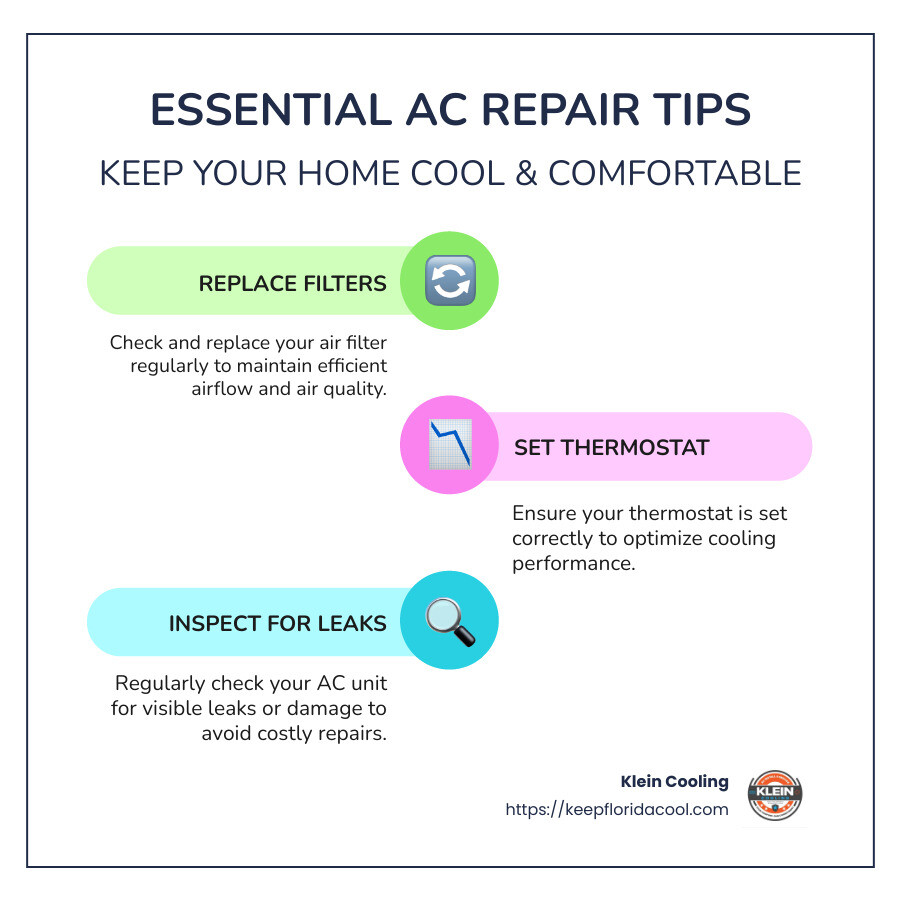
Air conditioning repair tips are vital for anyone looking to keep their home cool and comfortable during the hot months. If you’re in a hurry, here are some quick pointers:
- Check and replace your air filter regularly.
- Make sure your thermostat is set correctly.
- Inspect your AC unit for any visible leaks or damage.
Proper care of your air conditioning (AC) system can make all the difference in maintaining a comfortable home environment. AC units, whether central systems or standalone air conditioners, play a crucial role in regulating the temperature and humidity indoors. This is especially true in hot climates like Palm Coast, FL, where the heat can be relentless.
By understanding how your AC works, you can better troubleshoot minor issues yourself and know when it’s time to call in a professional. Not only does this save time and money, but it also ensures your unit runs efficiently, reducing energy costs and extending its lifespan.
For those like John, a retired veteran in Palm Coast, finding trustworthy and reliable service is critical. Ensuring your AC system operates smoothly with minimal unexpected costs aligns perfectly with Klein Cooling’s dedication to honest and expert service.
Understanding Your AC System
An air conditioning (AC) system is a complex machine with several components working together to keep your space cool and comfortable. Whether it’s a central air system or a standalone unit, understanding its parts and processes can help you troubleshoot issues and maintain your system effectively.
Key Components of an AC System
-
Compressor: Often referred to as the heart of the AC system, the compressor pumps refrigerant through the system, raising its temperature and pressure.
-
Condenser: Located outside your home, the condenser cools and condenses the refrigerant from a gas to a liquid.
-
Evaporator: Found inside the home, the evaporator allows the refrigerant to evaporate, absorbing heat from the indoor air.
-
Expansion Valve: This component regulates the amount of refrigerant entering the evaporator, controlling the cooling process.
-
Air Handler: Circulates the cooled air throughout your home, ensuring an even distribution of temperature.
How Your AC System Works
The cooling process of an AC system involves a cycle of evaporation and condensation. Here’s a simplified breakdown:
-
Step 1: The compressor compresses the refrigerant, turning it into a high-pressure, high-temperature gas.
-
Step 2: The condenser cools this gas, converting it into a liquid.
-
Step 3: The expansion valve reduces the refrigerant’s pressure as it enters the evaporator.
-
Step 4: In the evaporator, the refrigerant evaporates, absorbing heat from the indoor air and cooling it.
-
Step 5: The air handler then distributes this cooled air throughout your home.
This cycle repeats, ensuring your home stays cool and comfortable.
Why Understanding Your AC System Matters
Knowing the basics of how your AC system functions can empower you to handle minor issues yourself. For instance, if your AC isn’t cooling properly, it might be a simple issue like a dirty air filter or a blocked condenser.
Additionally, understanding these components helps you communicate effectively with HVAC professionals, ensuring you get the right service without unnecessary repairs.
In Palm Coast, FL, where temperatures can soar, having a well-functioning AC system is not just about comfort—it’s essential. By grasping these fundamentals, you can ensure your system runs efficiently, saving you money on energy bills and prolonging the life of your unit.
In the next section, we’ll explore common air conditioning problems and how to tackle them.
Common Air Conditioning Problems
Air conditioners are essential for comfort, especially during hot months. However, they can encounter issues that affect their performance. Let’s explore some common problems you might face with your AC system.
Not Cooling
One of the most frustrating issues is when your AC isn’t cooling your space. This could be due to several reasons:
-
Refrigerant Leaks: Without enough refrigerant, your AC can’t cool effectively. Signs of a leak include warm air from vents and increased humidity. A professional should handle refrigerant issues since recharging requires specific expertise.
-
Dirty Air Filters: Clogged filters restrict airflow, making the AC work harder. Regularly changing or cleaning filters can prevent this.
-
Blocked Condenser Unit: Leaves, debris, or dirt can block the condenser, affecting its ability to cool. Ensure the area around the unit is clear.
Leaking Water
Water leaks are another common issue. These can occur when:
-
Condensate Drain is Clogged: A blocked drain line can cause water to back up and leak. Regular cleaning can prevent clogs.
-
Drain Pan is Damaged: Over time, the drain pan can rust or crack, leading to leaks. Replacing the pan can solve this.
-
High Humidity: Excessive moisture can overwhelm the system. A dehumidifier might help manage indoor humidity levels.
Strange Noises
Unusual noises from your AC can indicate different problems:
-
Squealing: This might suggest a problem with the fan motor or blower. It’s best to have a professional check it out to avoid further damage.
-
Humming: A humming noise could be a sign of an issue with the capacitor. Again, professional intervention is advisable.
-
Banging or Rattling: Loose parts or debris in the unit can cause these sounds. Inspect the unit and tighten any loose components.
Bad Odors
Foul smells from your AC can be unpleasant and indicate underlying issues:
-
Mold Growth: A musty smell often means mold is present, likely due to high humidity and poor airflow. Regular maintenance, including cleaning the AC drain line, can help prevent mold.
-
Burning Smell: This could indicate electrical issues or overheating components. It’s crucial to turn off the unit and seek professional help immediately.
Understanding these common problems can help you address them promptly, ensuring your AC system continues to operate smoothly. While some issues can be handled with basic maintenance, others require professional expertise to prevent further damage.
In the next section, we’ll dig into Air Conditioning Repair Tips, providing practical advice for troubleshooting and maintaining your AC system.
Air Conditioning Repair Tips
When your air conditioner isn’t working properly, it can be a real headache, especially during the hottest months. But don’t worry—there are some troubleshooting steps and DIY fixes you can try before calling in the pros. Let’s explore some practical maintenance tasks you can tackle to keep your AC running smoothly.
Troubleshooting Basics
Start with the simple stuff. If your AC isn’t cooling, check these first:
-
Thermostat Settings: Ensure your thermostat is set to “cool” and the temperature is set lower than the current room temperature. Sometimes, the solution is as easy as adjusting the settings.
-
Power Supply: Make sure the AC unit is plugged in and the circuit breaker hasn’t tripped. If it has, reset it, but if it trips again, it’s time to call a professional.
DIY Fixes You Can Try
Some issues don’t require a technician. Here are a few DIY fixes you can handle:
-
Replace the Air Filter: A dirty filter can block airflow, making your AC less effective. Replace or clean your filter every month during the cooling season to maintain efficiency.
-
Clean the Outdoor Unit: Dirt, leaves, and debris can block the condenser fan. Turn off the power and use a garden hose to gently wash away debris. Keeping the area around the unit clear ensures better performance.
-
Seal Air Leaks: For window units, check the seal around the unit and use foam or weather stripping to close any gaps. This prevents cool air from escaping and hot air from entering.
Regular Maintenance Tasks
Routine maintenance can prevent many common AC problems. Here are some tasks to keep your system in top shape:
-
Inspect Ducts and Vents: Check for leaks or blockages in your ductwork. Use foil tape or duct mastic to seal small gaps. For window units, ensure a proper seal between the unit and window frame.
-
Schedule Annual Maintenance: Have a professional perform an annual checkup before the cooling season. This should include cleaning coils, checking refrigerant levels, and inspecting electrical components.
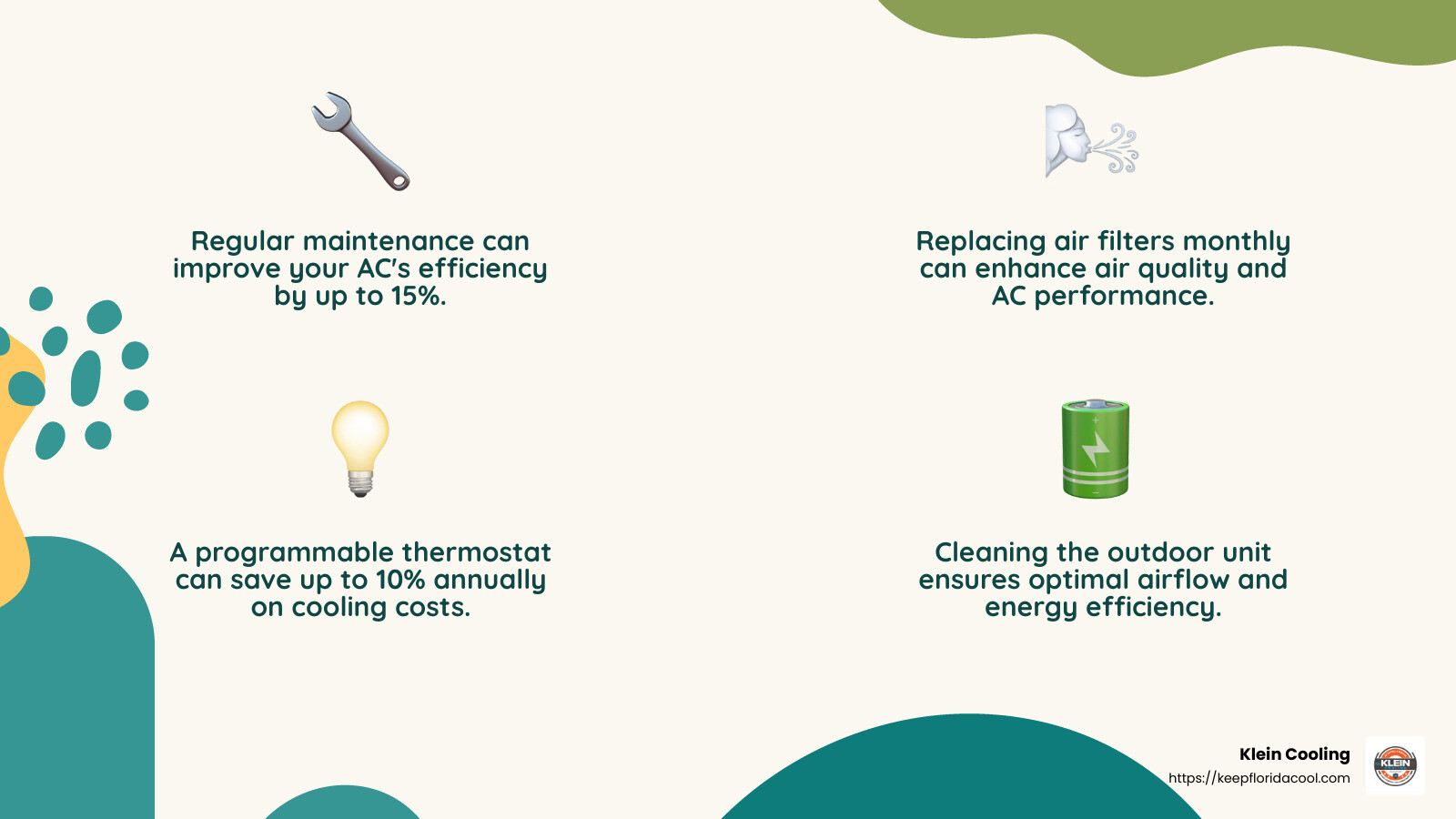
- Use a Programmable Thermostat: Set higher temperatures when you’re away and lower them when you’re home. This saves energy and reduces wear on your AC.
By tackling these air conditioning repair tips, you can keep your AC running efficiently and avoid costly repairs. While some fixes are simple, it’s crucial to know when to call a professional for more complex issues. In the next section, we’ll discuss DIY Troubleshooting Techniques to further empower you in maintaining your AC system.
DIY Troubleshooting Techniques
When your air conditioner acts up, it’s tempting to call a pro right away. But before you do, there are a few DIY troubleshooting techniques you can try. These simple steps can often solve the problem or at least narrow down the issue.
Check the Thermostat
Start by checking the thermostat. It might sound basic, but sometimes the simplest solution is the right one.
-
Set to Cool: Ensure it’s set to “cool” mode. If it’s accidentally set to “heat” or “off,” your AC won’t kick in.
-
Adjust Temperature: Make sure the temperature is set lower than the current room temperature. If it’s not, your AC won’t know to turn on.
-
Replace Batteries: If your thermostat is battery-powered, try replacing the batteries. Weak batteries can cause the thermostat to malfunction.
Replace the Air Filter
A clogged air filter can cause a host of problems, from reduced efficiency to freezing up.
-
Monthly Check: During the cooling season, check your air filter every month. Replace it if it’s dirty, or clean it if you have a reusable filter.
-
Proper Installation: Make sure the new filter is installed correctly, following the arrows on the filter for airflow direction.
Clean the Outdoor Unit
Your outdoor unit (condenser) needs to be clean and clear to function properly.
-
Turn Off Power: Safety first! Turn off the power to the unit before cleaning.
-
Remove Debris: Use a garden hose to gently wash away dirt, leaves, and debris from the unit. Avoid using high pressure to prevent damage.
-
Clear Surroundings: Ensure there’s about two to three feet of clear space around the unit. Trim back any bushes or foliage that might obstruct airflow.
These DIY troubleshooting techniques are straightforward and can save you time and money. However, if these steps don’t resolve the issue, it might be time to call in a professional. In the next section, we’ll discuss when it’s necessary to seek expert help and how to choose the right service.
When to Call a Professional
While DIY fixes can handle some minor issues, there are times when it’s best to call in the experts. Knowing when to do so can save you time, money, and ensure your safety.
Safety First
Safety should always be your top priority. Air conditioners are complex machines with electrical components that can be dangerous if mishandled. If your AC is making strange noises, emitting bad odors, or tripping the circuit breaker, these are signs that something more serious might be wrong. Avoid the risk of injury or further damage by contacting a professional.
Complex Issues
Some problems are just too complex for a DIY approach. For example, refrigerant leaks require special handling and tools to fix. Attempting to repair these on your own can lead to more damage and potentially void your warranty.
Other issues like a malfunctioning compressor or electrical problems are best left to those who have the right experience and equipment. Professionals can quickly diagnose and fix these problems, ensuring your system runs smoothly.
Professional Expertise
Hiring a professional means you’re getting someone with the training and tools to handle a wide range of issues. They can perform regular maintenance tasks like:
- Inspecting and cleaning coils
- Checking refrigerant levels
- Lubricating moving parts
These tasks help prevent future issues and extend the lifespan of your AC system. A professional can also provide you with air conditioning repair tips custom to your specific system.
When you hire a reliable service provider, you not only get peace of mind but also the assurance that your AC is in good hands. If you’re in Palm Coast, FL, Klein Cooling offers expert services to keep your home cool and comfortable.
Frequently Asked Questions about Air Conditioning Repair
How can I fix my air conditioner myself?
Simple fixes can often solve common air conditioning problems without needing a professional. Start with these DIY tips:
- Replace or clean the air filter. A clogged filter can reduce airflow and cause your AC to work harder.
- Check the thermostat settings. Make sure it’s set to “cool” and at a temperature lower than the current room temperature.
- Clean the outdoor unit. Remove any debris, leaves, or grass around the condenser to improve efficiency.
These steps can help resolve minor issues and improve your AC’s performance.
How do I fix my AC that is not cooling?
When your AC isn’t cooling, troubleshooting can help identify the problem. Here are some common issues to check:
- Dirty evaporator or condenser coils. These can prevent your system from cooling effectively. Cleaning them can often restore cooling.
- Low refrigerant levels. If your AC is blowing warm air, it might need more refrigerant. This is a job for a professional.
- Blocked vents or ducts. Ensure all vents are open and unobstructed to allow proper airflow.
If these fixes don’t work, it may be time to call a professional to diagnose and repair the issue.
What are the signs that my air conditioner needs repair?
Recognizing the indicators that your AC needs repair can save you from more significant problems down the line:
- Strange noises. Grinding, squealing, or banging sounds can signal mechanical issues.
- Leaking water. This could be a sign of a blocked condensate drain or a refrigerant leak.
- Bad odors. Musty smells might indicate mold in the ductwork or a dirty filter.
- Constant cycling. If your AC turns on and off frequently, it might be struggling to maintain the set temperature.
If you notice any of these symptoms, it’s best to contact a professional to prevent further damage and ensure your AC runs efficiently.
Conclusion
At Klein Cooling, we understand that a well-functioning air conditioning system is crucial for comfort, especially in the warm climate of Palm Coast, FL. Our expert services are designed to keep your home cool and comfortable all year round. As a family-owned business, we pride ourselves on combining honesty, integrity, and exceptional service with the latest in HVAC technology.
Whether you’re dealing with minor issues or complex repairs, our team is here to help. We offer comprehensive HVAC solutions, from installation and maintenance to air conditioning repair. Our technicians are not only skilled but also committed to treating your home with the same care and attention they would their own.
We also offer special discounts for first responders, military personnel, and seniors, reflecting our commitment to serving our community with the respect and gratitude they deserve.
If you’re in Palm Coast, FL, and need reliable HVAC services, contact us today to experience the Klein Cooling difference. Let us help you beat the heat with our expert services and keep your air conditioning system running smoothly.