
Stay Informed: A Guide to Palm Coast’s Air Quality
Air quality Palm Coast FL is often a point of pride for residents and visitors alike. With its clean air and mild climate, this area boasts conditions that are typically quite favorable. As of today, the air quality status in Palm Coast is classified as “Good,” meaning that the levels of air pollutants are low, and air pollution poses little or no risk to health.
Here’s a quick snapshot of today’s air quality in Palm Coast:
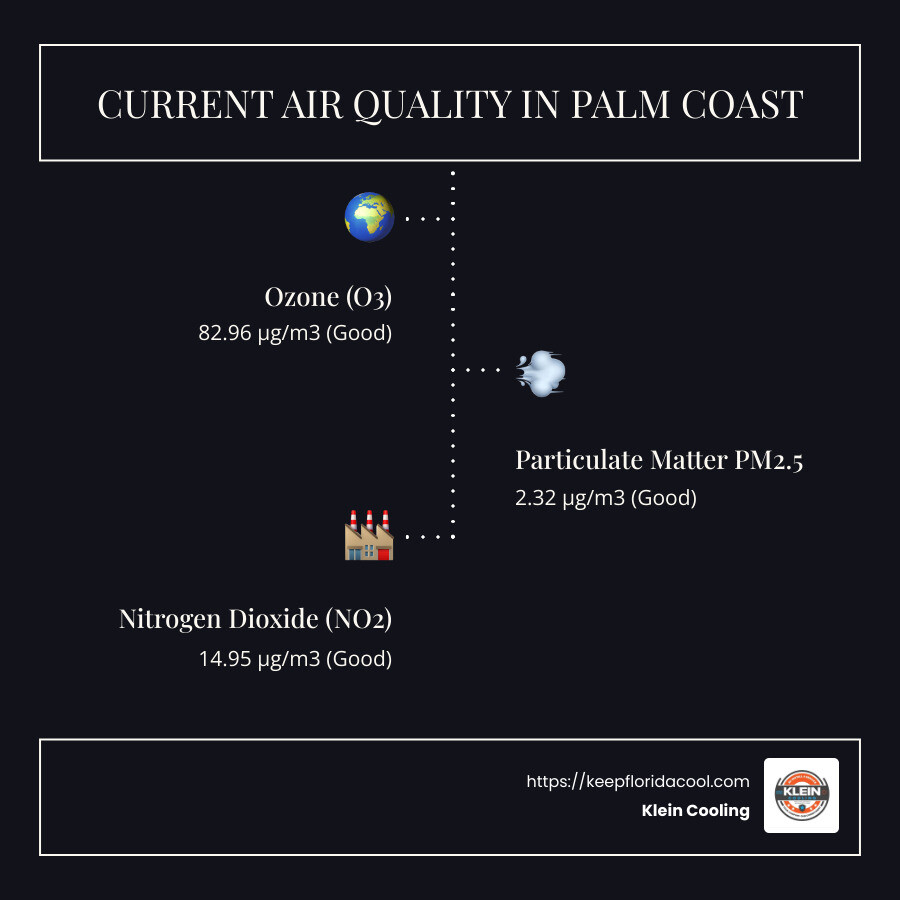
- Ozone (O3): 82.96 µg/m3 (Good)
- Carbon Monoxide (CO): 490 µg/m3 (Good)
- Nitrogen Dioxide (NO2): 14.95 µg/m3 (Good)
- Particulate Matter PM10: 5.36 µg/m3 (Good)
- Particulate Matter PM2.5: 2.32 µg/m3 (Good)
- Sulfur Dioxide (SO2): 3.39 µg/m3 (Good)
Palm Coast’s air is clean and breathable, allowing for open windows and enjoyable outdoor activities without concern. The city stays vigilant about maintaining excellent air standards by monitoring key pollutants like ozone and particulate matter, ensuring a high quality of life for its residents.
Understanding Air Quality in Palm Coast
Air quality in Palm Coast, FL, is often celebrated for its cleanliness and health benefits. This is largely due to the low levels of pollutants like ozone and particulate matter, which are carefully monitored.
Ozone (O3)
Ozone is a key component of Palm Coast’s air quality. While it is beneficial in the upper atmosphere, at ground level, it can cause health issues. Fortunately, Palm Coast maintains low ozone levels, with recent measurements at 82.96 µg/m3, which is considered “Good.”
Ozone can irritate the respiratory system, so maintaining these levels is crucial for community health.
Particulate Matter (PM10 and PM2.5)
Particulate matter is another significant factor in air quality. These tiny particles can be inhaled and may pose health risks, especially to sensitive groups. Palm Coast’s particulate matter levels are impressively low:
- PM10: 5.36 µg/m3
- PM2.5: 2.32 µg/m3
Both are well within the “Good” range, ensuring that the air remains clear and safe to breathe.
Other Pollutants
In addition to ozone and particulate matter, other pollutants like Nitrogen Dioxide (NO2) and Sulfur Dioxide (SO2) are also monitored:
- NO2: 14.95 µg/m3
- SO2: 3.39 µg/m3
These levels are also classified as “Good,” contributing to the overall high air quality in Palm Coast.
By keeping these pollutants in check, Palm Coast ensures its residents enjoy a healthy environment. This vigilance is key to maintaining the city’s reputation for excellent air quality.
Current Air Quality Levels
Palm Coast, FL, is known for its good air quality, which makes it a great place for outdoor activities and healthy living. The air quality here is generally considered satisfactory, with low pollutant levels posing little to no risk to the general population.
Ozone (O3)
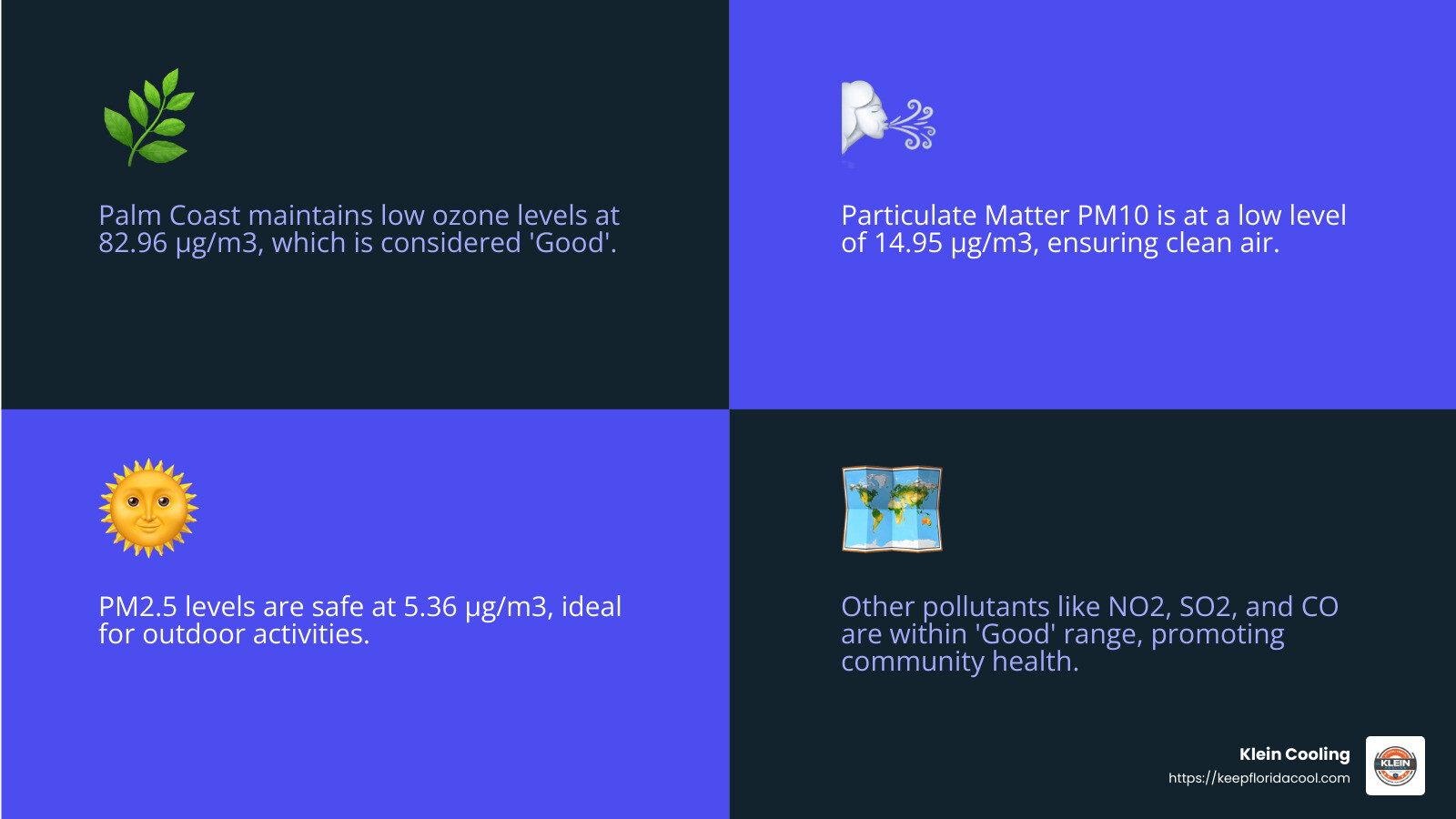
Ozone is the primary pollutant of focus in Palm Coast. While high levels of ground-level ozone can lead to respiratory issues, Palm Coast maintains low ozone concentrations. Current measurements show an ozone level of 82.96 µg/m3, which falls in the “Good” category. This means that the air is safe for most people to breathe, even those with respiratory conditions.
Particulate Matter (PM10 and PM2.5)
Particulate matter includes tiny particles that can be harmful when inhaled. Palm Coast boasts low levels of both PM10 and PM2.5:
- PM10: 14.95 µg/m3
- PM2.5: 5.36 µg/m3
These numbers are well within the “Good” range, indicating that the air quality is excellent and safe for outdoor activities.
Other Pollutants
Palm Coast also keeps track of other pollutants, ensuring they remain at safe levels:
- Nitrogen Dioxide (NO2): 14.95 µg/m3
- Sulfur Dioxide (SO2): 3.39 µg/m3
- Carbon Monoxide (CO): 490 µg/m3
These pollutants are also classified as “Good,” meaning they pose minimal risk to health.
By maintaining these low pollutant levels, Palm Coast provides a clean and healthy environment for its residents. This commitment to air quality helps ensure that everyone can enjoy the benefits of living in such a pristine area.
Factors Affecting Air Quality in Palm Coast
Understanding the factors that affect air quality in Palm Coast, FL, is essential for maintaining the region’s healthy environment. Several elements, including weather patterns, pollution sources, and seasonal changes, play a crucial role in determining air quality.
Weather
Weather conditions significantly impact air quality. In Palm Coast, the climate is generally warm and humid, which can disperse pollutants more effectively than in areas with still air. However, during periods of high heat and humidity, pollutants like ozone can form more readily. Fortunately, Palm Coast’s coastal location often brings breezes that help to clear the air, maintaining its good quality.
Pollution Sources
While Palm Coast enjoys relatively low pollution levels, there are still sources that contribute to air quality fluctuations. Local traffic and industrial activities are the primary sources of pollutants like nitrogen dioxide (NO2) and sulfur dioxide (SO2). Despite these sources, the overall impact on air quality is minimal due to effective regulations and the city’s commitment to maintaining clean air.
Seasonal Changes
Seasonal variations also affect air quality. For instance, during the spring and summer months, higher temperatures can lead to increased ozone formation. Conversely, in the cooler months, pollutants can be trapped near the ground due to temperature inversions, potentially affecting sensitive individuals. However, Palm Coast’s air quality remains generally good throughout the year, thanks to its proactive measures and favorable climate.
By understanding these factors, residents and visitors can better appreciate the efforts made to maintain excellent air quality in Palm Coast. This knowledge also empowers the community to take steps to protect and improve their environment, ensuring a healthy and enjoyable place to live.
Health Implications of Air Quality
While Palm Coast enjoys generally good air quality, it’s important to understand the potential health implications associated with air pollution, particularly for sensitive groups. Let’s explore the specifics of how air quality can affect health.
PM2.5 and Health Risks
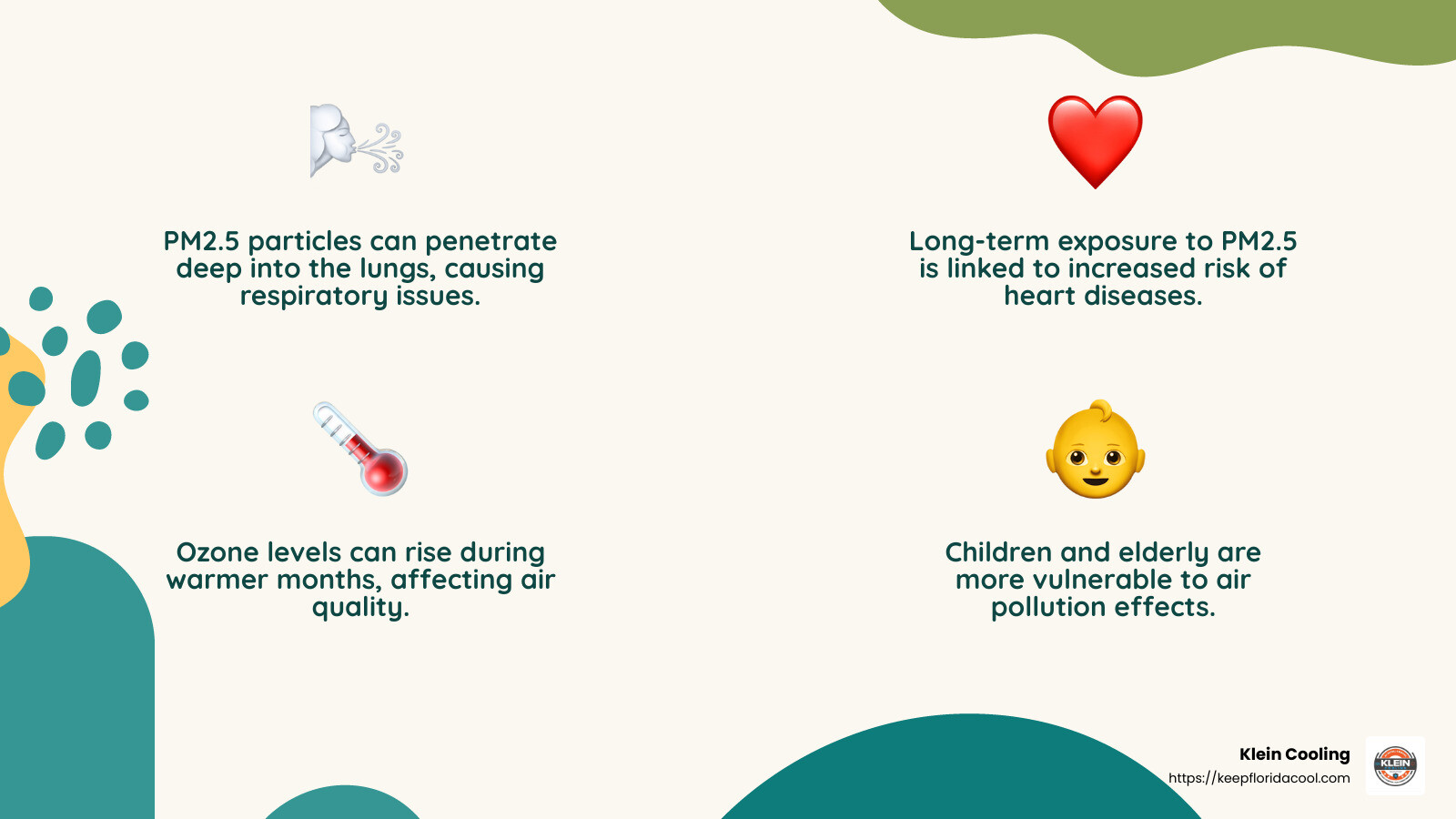
PM2.5 refers to fine particulate matter with a diameter of less than 2.5 micrometers. These tiny particles can penetrate deep into the lungs and even enter the bloodstream, posing significant health risks.
-
Respiratory Issues: PM2.5 can aggravate existing respiratory conditions like asthma and bronchitis. It may cause symptoms such as coughing, throat irritation, and difficulty breathing.
-
Cardiovascular Effects: Long-term exposure to PM2.5 is linked to heart-related issues, including increased risk of heart attacks and strokes.
-
Sensitive Groups: Children, the elderly, and individuals with pre-existing health conditions are more susceptible to the adverse effects of PM2.5. For these groups, even short-term exposure can lead to serious health problems.
Ozone and Other Pollutants
Ozone (O3) is another significant pollutant in Palm Coast, especially during warmer months when its levels can rise.
-
Respiratory Aggravation: Ozone can irritate the airways, causing symptoms such as throat irritation, chest pain, and shortness of breath.
-
Sensitive Individuals: Those with asthma or other respiratory diseases may experience worsened symptoms when ozone levels are higher.
Protecting Health
To minimize health risks associated with air pollution, consider the following:
-
Stay Informed: Keep an eye on daily air quality reports to know when pollutant levels are higher.
-
Limit Outdoor Activities: On days when PM2.5 or ozone levels are elevated, sensitive groups should reduce outdoor activities.
-
Indoor Air Quality: Use air purifiers and keep windows closed during high pollution days to maintain cleaner indoor air.
Understanding the health implications of air quality in Palm Coast helps residents take proactive steps to protect their well-being. By staying informed and making small changes, individuals can significantly reduce their exposure to harmful pollutants.
Frequently Asked Questions about Air Quality in Palm Coast
What is the air quality in Palm Coast today?
Today, Palm Coast enjoys a good air quality rating. This means the air is clean and poses little to no risk to the general public. The primary pollutant of concern is Ozone (O3), but current levels are considered safe.
What pollutants are most common in Palm Coast?
In Palm Coast, the most common pollutants are:
- Ozone (O3): This is the main pollutant. It can cause respiratory issues, especially during warmer months.
- PM10 and PM2.5: These are particulate matters that can affect airways and lungs. However, current levels are low and pose minimal risk.
- Nitrogen Dioxide (NO2), Sulfur Dioxide (SO2), and Carbon Monoxide (CO): These are also present but are at good levels, causing little concern for health.
How does Palm Coast’s air quality compare to other Florida cities?
Compared to other cities in Florida, Palm Coast generally enjoys better air quality. While some areas may experience higher pollution due to industrial activities or traffic, Palm Coast’s air quality is often rated as good. This makes it a healthier environment, particularly beneficial for sensitive groups like children and the elderly.
Understanding these aspects of air quality in Palm Coast helps residents make informed decisions about their daily activities and health precautions.
Conclusion
At Klein Cooling, we understand the importance of maintaining good air quality in Palm Coast, FL for the well-being of our community. Our commitment goes beyond providing top-notch HVAC services; we aim to improve the indoor air quality of your homes and ensure a healthier living environment.
Air quality monitoring is crucial for community health. By staying informed about pollutants like Ozone (O3) and particulate matter, we can take proactive steps to protect our health. Regular updates on air quality help residents avoid exposure during high pollution periods, safeguarding sensitive groups such as children and the elderly.
We believe in empowering our community with the knowledge and tools needed to improve indoor air quality. Our services include air duct cleaning, which removes dust and allergens, enhancing air circulation and reducing health risks. We also offer solutions like dehumidification and air purification systems to maintain a clean and safe indoor environment.
Together, we can ensure that Palm Coast remains a place where families can breathe easy and enjoy outdoor activities without worry. For more information on how we can help you improve your indoor air quality, visit our additional services page and find the Klein Cooling difference today.