
The Air We Breathe: Monitoring Systems Explained
Air quality monitoring systems are crucial tools in today’s world, providing valuable insights into the air we breathe. These systems help us measure and understand the concentration of pollutants such as particulate matter, carbon dioxide, and other harmful gases. By continuously analyzing data, they play a vital role in protecting public health, enhancing workplace safety, and achieving environmental goals.
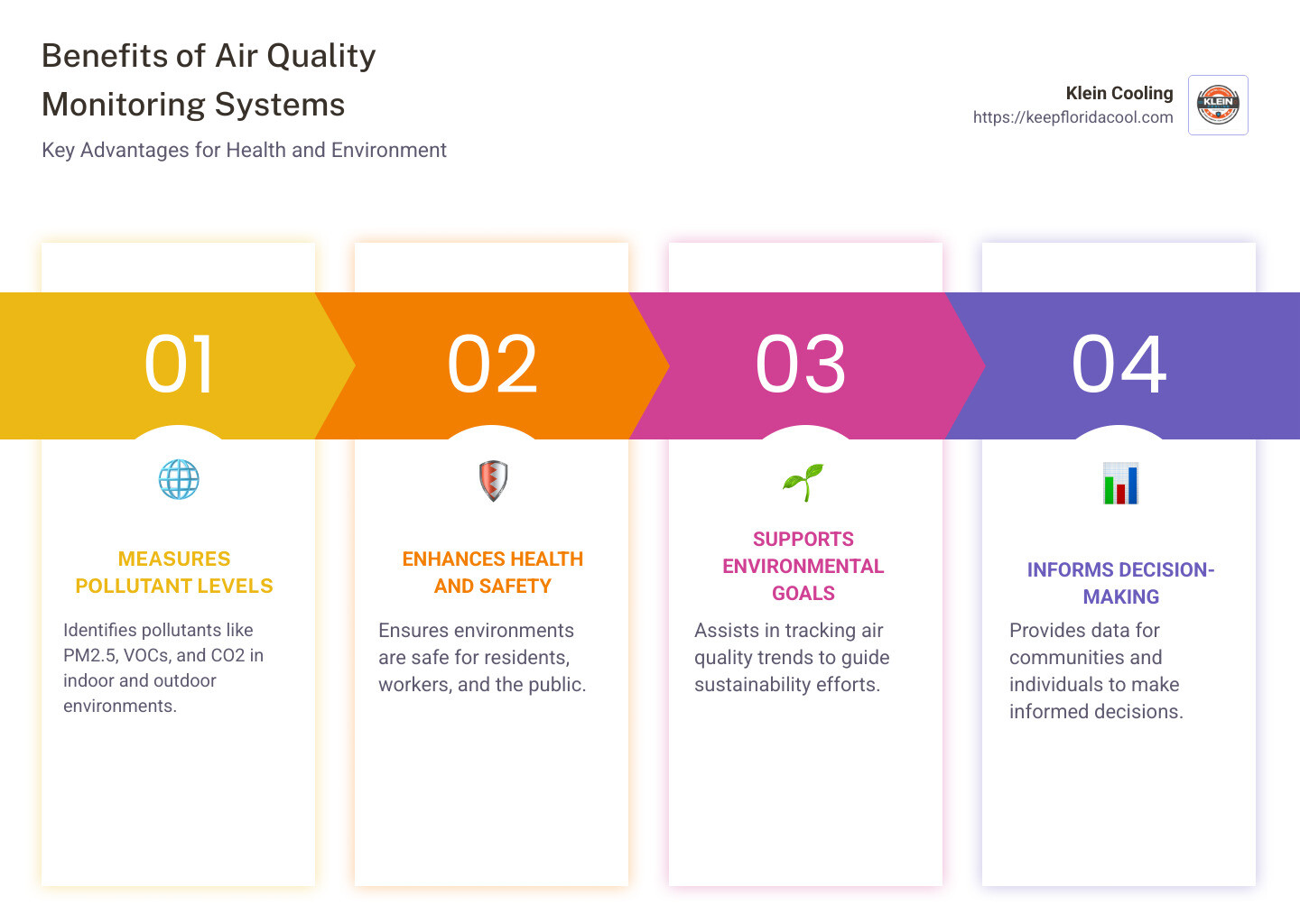
Key Benefits of Air Quality Monitoring Systems:
- Measures Pollutant Levels: Identifies pollutants like PM2.5, VOCs, and CO2 that impact indoor and outdoor environments.
- Improves Health and Safety: Helps ensure environments are safe for residents, workers, and the public.
- Supports Environmental Goals: Assists in tracking air quality trends to guide sustainability efforts.
For those concerned about the atmosphere in their homes, workplaces, or community spaces, understanding the significance of air quality monitoring can lead to improved health outcomes. When the Canadian wildfire smoke reached New York City, proactive air quality monitoring assured companies that indoor air remained safe (HBR, 2023). This incident highlights the importance of having a reliable system in place.
By leveraging reliable and actionable data provided by these systems, communities and individuals can make informed decisions to improve air quality.
Handy Air quality monitoring systems terms:
Understanding Air Quality Monitoring Systems
Air quality monitoring systems are essential for keeping tabs on the pollutants and environmental factors that affect the air we breathe. Let’s explore the different types of these systems and their key components.
Types of Air Quality Monitoring Systems
Indoor Systems: These are designed to monitor air quality inside buildings. They often focus on pollutants like carbon monoxide, carbon dioxide, and volatile organic compounds (VOCs). These systems help ensure that indoor environments, such as homes and offices, remain healthy and safe.
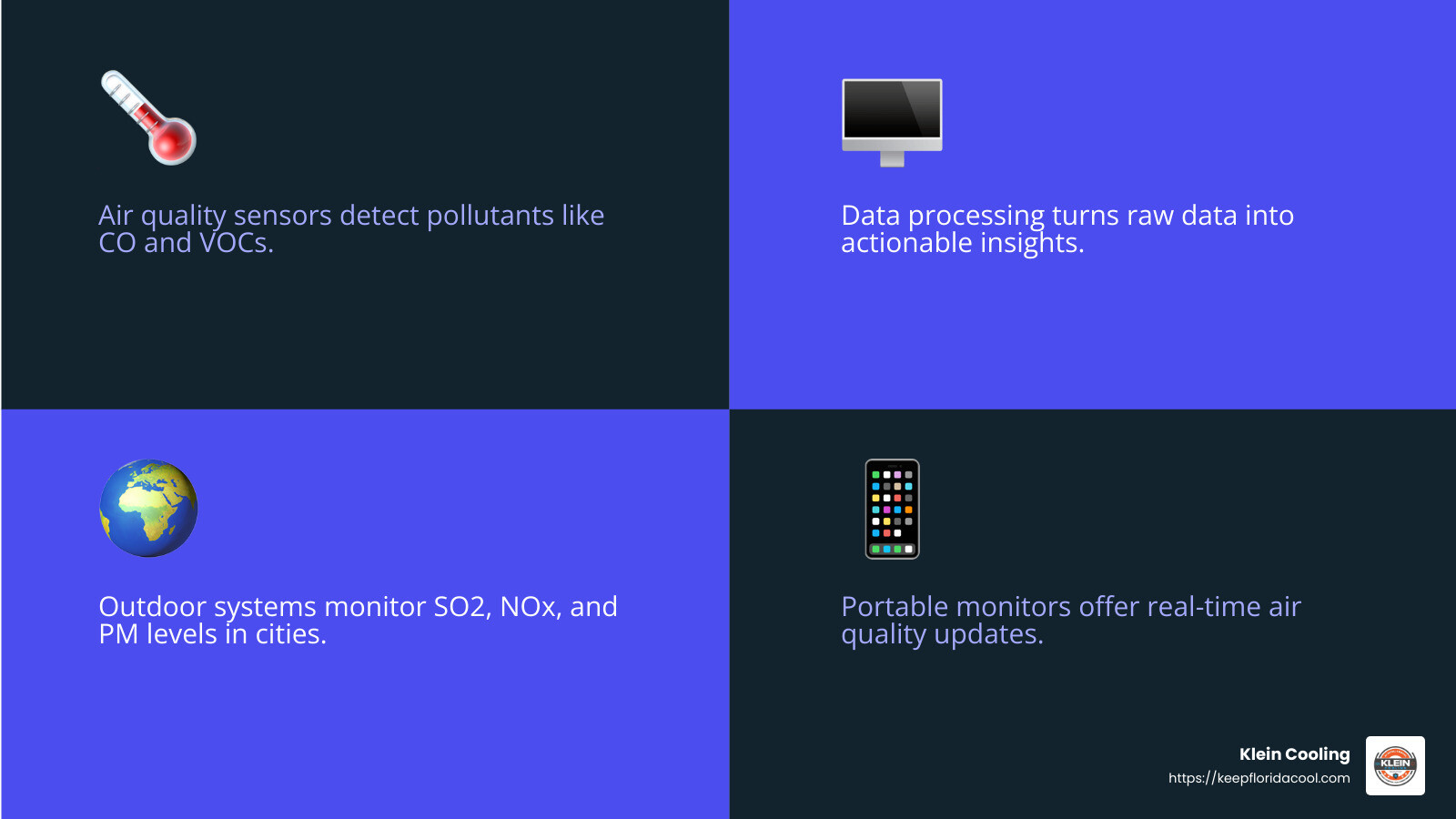
Outdoor Systems: These systems are tasked with measuring air quality in open spaces. They track pollutants like sulfur dioxide (SO2), nitrogen oxides (NOx), and particulate matter (PM). Outdoor systems are often used by cities to monitor air quality trends and address public health concerns.
Portable Systems: Portable air quality monitors, such as the Atmotube PRO, are versatile and can be used both indoors and outdoors. They provide real-time data on pollutants like fine particles and VOCs, making them ideal for personal use or temporary monitoring needs.
Key Components of Monitoring Systems
Sensors: The heart of any air quality monitoring system is its sensors. These devices detect specific pollutants and environmental factors. For example, some sensors measure particulate matter, while others might focus on gases like carbon monoxide or VOCs. Advanced systems may have multiple sensors to provide a comprehensive air quality analysis.
Data Processing: Once the sensors collect data, it needs to be processed. This involves analyzing the raw data to provide understandable and actionable insights. Some systems use artificial intelligence and machine learning to improve data accuracy and provide predictive analytics.
Display: The final component is how the data is presented. Many systems have visual displays that show pollutant levels using numbers, colors, or graphics. Some also offer connectivity options, allowing data to be accessed via apps or cloud-based platforms. This makes it easier for users to monitor air quality trends over time.
Understanding these types and components helps in choosing the right system for your needs. Whether you’re looking to improve indoor air quality at home or monitor outdoor conditions for a community, knowing what each system offers is crucial.
Benefits and Limitations of Air Quality Monitoring
Air quality monitoring systems are invaluable tools for understanding the air we breathe. They provide insights that can lead to healthier environments and informed decisions. However, like any tool, they come with their own set of benefits and limitations.
Benefits
Real-Time Data: One of the most significant advantages of air quality monitoring systems is their ability to provide real-time data. This is crucial during events like wildfires or pollution spikes, where immediate information can guide timely actions. For example, during the Canadian wildfire smoke event in New York City, real-time data helped ensure that indoor air quality remained safe for employees even as outdoor levels were dangerously high.
Health and Productivity: Monitoring air quality can have a direct impact on health and productivity. Cleaner air reduces the risk of respiratory issues, headaches, and other health problems. For businesses, this translates into fewer sick days and a more productive workforce. Consider the case of a quarry using real-time dust monitoring to protect the surrounding community and optimize productivity.
Informed Decision-Making: With accurate data, individuals and organizations can make better decisions. Whether it’s adjusting HVAC systems, planning outdoor activities, or implementing pollution control measures, having precise air quality information is key. This data is especially useful for meeting sustainability goals and ensuring compliance with environmental standards.
Limitations
Accuracy and Precision: While air quality monitors provide valuable data, their accuracy and precision can vary. The EPA has noted that many monitors have historically struggled with precision and bias, sometimes undercounting pollution levels. Although improvements have been made, recognize these potential discrepancies when interpreting results.
Incomplete Data: No single monitor can measure all pollutants. Most systems are designed to detect specific contaminants, which means other harmful substances might go unnoticed. For example, indoor monitors might focus on VOCs and PM2.5 but miss other pollutants like formaldehyde unless specifically designed to detect them.
Environmental Factors: The performance of air quality monitors can be affected by environmental conditions. Factors such as temperature, humidity, and airflow can influence readings, especially for indoor monitors. Proper placement and understanding of these factors are crucial to obtaining reliable data.
In summary, while air quality monitoring systems offer significant benefits in terms of health, productivity, and decision-making, they also come with limitations related to accuracy, precision, and the scope of data they can provide. Understanding these aspects can help users make the most of these systems.
How to Choose the Right Air Quality Monitoring System
Selecting the right air quality monitoring system can be a game-changer for both indoor and outdoor environments. Here’s a simple guide to help you steer the key considerations.
Considerations for Indoor Use
-
Pollutants and Environmental Factors: Start by identifying the specific pollutants you need to monitor indoors. Common ones include carbon dioxide (CO2), volatile organic compounds (VOCs), and particulate matter (PM). Some monitors also track environmental factors like temperature and humidity, which can affect indoor air quality.
-
Placement: Proper placement is crucial for accurate readings. Indoor monitors should be placed away from direct airflow from vents or windows to avoid skewing data. Consider areas where people spend the most time, like living rooms or offices, to get a true sense of the air quality.
-
Cost and Features: Low-cost monitors are available, but prices can vary based on features. Some devices offer real-time data displays, while others connect to apps for remote monitoring. Decide which features are essential for your needs and budget. A higher price doesn’t always mean better performance.
-
Application: Think about how you’ll use the data. If you’re looking to improve air quality for health reasons, focus on monitors that provide actionable insights. For compliance with building standards, choose systems that meet specific regulatory requirements.
Considerations for Outdoor Use
-
Durability and Weather Conditions: Outdoor monitors must withstand various weather conditions. Look for systems designed to handle extreme temperatures, rain, and dust. The AirQo project in Uganda, for instance, developed sensors that can operate under harsh conditions, ensuring reliable data collection.
-
Pollutants and Data Integration: Outdoor air quality systems typically monitor pollutants like ozone (O3), nitrogen oxides (NOx), and sulfur dioxide (SO2). Ensure the system can integrate with existing data networks for comprehensive monitoring and analysis.
-
Cost and Features: Like indoor systems, outdoor monitors come with a range of features. Some offer solar power options, which can be crucial in areas with unreliable electricity. Others provide cloud-based data access, enabling you to monitor air quality remotely.
-
Application and Placement: Determine the primary purpose of your outdoor monitoring. Is it for community health, research, or regulatory compliance? This will guide your choice of features. Placement is also key; sensors should be positioned where pollution sources are most prevalent, such as near roads or industrial areas.
Choosing the right air quality monitoring system involves balancing cost, features, and specific needs. By understanding the pollutants and environmental factors relevant to your situation, you can make an informed decision that improves air quality and meets your goals.
Frequently Asked Questions about Air Quality Monitoring Systems
What is the best air quality monitoring equipment?
When it comes to selecting the best air quality monitoring systems, several options stand out for their features and reliability:
-
uHoo: Known for its comprehensive indoor air quality monitoring, uHoo tracks nine different air quality parameters, including CO2, PM2.5, and VOCs. It’s a great choice for those who want detailed insights into their indoor environment.
-
AirGradient ONE: This device is popular for its open-source nature, allowing users to customize and upgrade their monitoring capabilities. It’s particularly suited for tech-savvy individuals who want flexibility.
-
Qingping Air Monitor: Combining sleek design with functionality, Qingping offers real-time data on key pollutants. Its user-friendly interface makes it accessible for home use.
-
Atmotube PRO: This portable monitor is ideal for both indoor and outdoor use. It detects fine particles and VOCs, providing real-time alerts through a smartphone app. This makes it perfect for those on the move.
Do air quality monitors actually work?
Air quality monitors are effective tools for understanding the air we breathe, but they do come with some limitations.
-
Accuracy: While most modern monitors provide reasonably accurate readings, factors like sensor quality and placement can affect precision. It’s important to follow the manufacturer’s guidelines for the best results.
-
Data Interpretation: The data collected by these devices needs to be interpreted correctly. For example, an alert from a low-cost monitor might not indicate an immediate health risk, unlike a smoke detector. Understanding the context of the data is crucial.
Which method is commonly used for air quality monitoring?
Air quality can be monitored using various methods, each with its own advantages and applications:
-
Passive Sampling: This method involves collecting air samples over a period without active pumping. It’s cost-effective and useful for long-term monitoring of pollutants like NOx and SO2. However, it doesn’t provide real-time data.
-
Diffusion Tubes: Often used in passive sampling, these tubes absorb pollutants over time and are later analyzed in a lab. They’re simple and low-cost but require processing time before results are available.
These methods offer a snapshot of air quality but might not be suitable for all situations. For real-time monitoring, active sampling methods, like those used in the devices mentioned above, are more appropriate.
Conclusion
At Klein Cooling, we understand the importance of maintaining excellent indoor air quality for health and comfort. As a family-owned business in Palm Coast, FL, we offer a range of HVAC solutions designed to improve air quality and ensure your environment is as safe as it is comfortable.
Air quality improvement is not just about installing the right equipment—it’s about creating a comprehensive strategy that includes regular maintenance and air duct cleaning. Our preventative maintenance plans help extend the life of your HVAC system while ensuring it operates efficiently. This includes cleaning condenser coils, checking electrical components, and replacing air filters. Regular maintenance can significantly improve indoor air quality by reducing allergens and pollutants.
Additionally, our professional AC duct cleaning services remove accumulated dust and debris from your air ducts, enhancing airflow and reducing allergens. This service is crucial for anyone looking to breathe easier and enjoy a healthier indoor environment.
We also provide indoor air quality options like dehumidification and air purification systems. These solutions effectively reduce humidity and eliminate pollutants, creating a more comfortable and healthier home or business environment.
If you’re interested in learning more about how our services can improve your air quality, visit our Additional Services page. Here, you’ll find detailed information on our offerings and how they can benefit your home or business.
At Klein Cooling, we pride ourselves on combining family values with professional HVAC solutions. Contact us today to find out how we can help you improve your indoor air quality and ensure a healthier environment for everyone.