
Fresh Air Indoors: A Guide to Improving Air Quality at Home
Breathing Easier: The Importance of Indoor Air Quality
Improve indoor air quality is crucial for a healthier home environment. Poor air quality can affect your well-being and lead to health issues. Here’s what you need to know:
- Indoor Pollution Sources: Radon, VOCs, and particulate matter like dust and smoke are common indoors.
- Health Impacts: From headaches to respiratory diseases, the air quality in your home is critical.
- Simple Solutions: Improve air circulation, use natural cleaning products, and keep your space clean.
Nowadays, many Americans spend a staggering 90% of their time indoors. Yet, the air within our homes can be two to five times more polluted than the air outside. This can lead to an array of health problems. Think headache, irritation, asthma, and, over time, even more severe conditions.
Why does this happen? The culprits are closer than you think. Everyday activities, like cooking on a gas stove or using certain paints and cleaners, release harmful gases and particles. Then there’s radon, creeping through cracks, ready to silently wreak havoc on your lungs.
As we begin examining how to improve the air we breathe at home, let’s first understand how crucial it is for our health and well-being. Skipping this could mean missing the chance of living a life free of avoidable health issues.
Understanding Indoor Air Pollution
Indoor air pollution is a silent intruder in our homes, often unnoticed until it starts affecting our health. Knowing its causes and sources can help us tackle it effectively.
Causes of Indoor Air Pollution
-
Radon: This invisible, odorless gas sneaks in from the ground through cracks in floors and walls. It’s the second leading cause of lung cancer in the U.S. Testing your home for radon is crucial, especially if you live in an area where it’s prevalent.
-
Particulate Matter: These are tiny particles like dust, smoke, and pollen floating in the air. They can penetrate deep into the lungs and even enter the bloodstream, causing respiratory and cardiovascular problems. Regular vacuuming and using air purifiers can help reduce these particles.
-
Volatile Organic Compounds (VOCs): VOCs are chemicals released from everyday items like paints, cleaning products, and furniture. They can irritate the eyes, nose, and throat, and long-term exposure might damage the liver or central nervous system. Opt for low-VOC products and ensure proper ventilation when using such materials.
-
Allergens: Pet dander, mold, and dust mites are common indoor allergens. They can trigger asthma and allergies, making it hard to breathe comfortably at home. Maintaining cleanliness and controlling humidity levels can help keep these allergens at bay.
Understanding these pollutants and their sources is the first step in creating a healthier home environment. By addressing the causes, we can significantly improve indoor air quality and protect our health.
Improve Indoor Air Quality: Effective Strategies
To improve indoor air quality, we need to focus on three main strategies: source control, ventilation, and air cleaners. Each plays a crucial role in ensuring the air we breathe indoors is as clean and healthy as possible.
Source Control
The most effective way to tackle indoor air pollution is to eliminate the sources of pollutants. This means identifying and managing the items or activities in your home that release harmful substances.
-
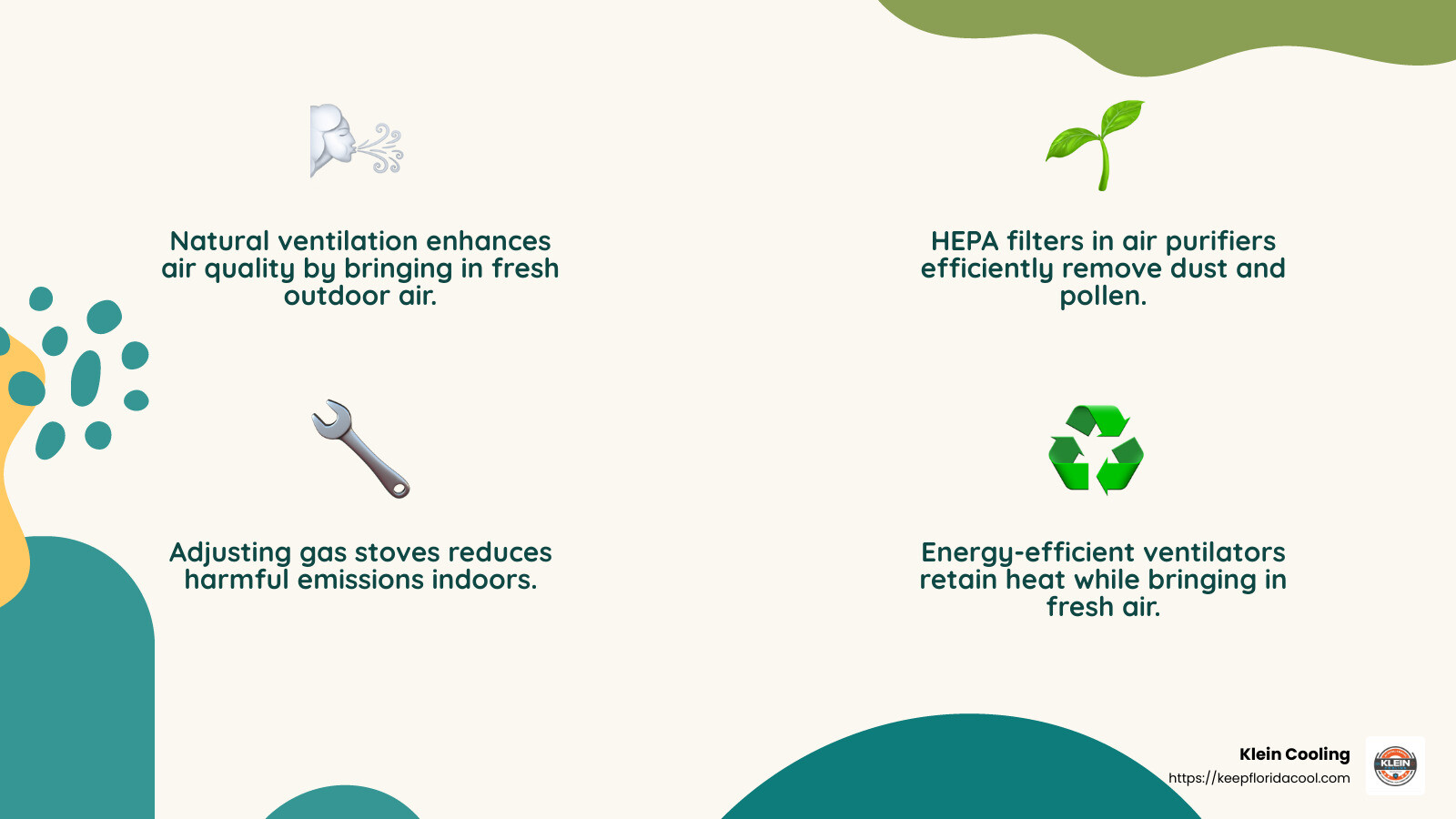
Adjust Gas Stoves: Reducing emissions from gas stoves can significantly lower the amount of indoor air pollution. Regular maintenance and proper use can help keep emissions in check.
-
Seal or Enclose Asbestos-Containing Materials: If your home has materials containing asbestos, seal or enclose them to prevent asbestos fibers from becoming airborne.
-
Choose Low-VOC Products: When painting or using cleaning products, opt for those labeled as low-VOC to minimize the release of volatile organic compounds.
Ventilation
Increasing ventilation is another key strategy. By bringing more fresh outdoor air inside, we can dilute indoor pollutants and improve air quality.
-
Natural Ventilation: Open windows and doors when the weather permits to let fresh air circulate. This is especially important during activities that generate pollutants, like cooking or painting.
-
Mechanical Ventilation: Use exhaust fans in kitchens and bathrooms to remove moisture and odors. Advanced HVAC systems with outdoor air intakes can also help maintain a steady flow of fresh air.
-
Energy-Efficient Ventilators: Consider installing energy-efficient heat recovery ventilators (HRVs) that bring in fresh air while retaining heat, reducing energy costs.
Air Cleaners
Air cleaners, or purifiers, are devices designed to remove contaminants from the air. They can be particularly useful in areas with limited natural ventilation.
-
Portable Air Purifiers: These devices can be placed in specific rooms to target pollutants like dust, pollen, and smoke. Look for models with HEPA filters for maximum effectiveness.
-
HVAC Filters: Regularly replacing or upgrading the filters in your heating and cooling system can improve air quality by trapping airborne particles.
By implementing these strategies, you can create a healthier indoor environment. Combining these methods will yield the best results, as each addresses different aspects of indoor air quality.
Next, we will explore the top 10 ways to further improve indoor air quality in your home.
Top 10 Ways to Improve Indoor Air Quality
Improving indoor air quality is crucial for a healthy home. Here are ten practical ways to achieve this:
1. Open Windows
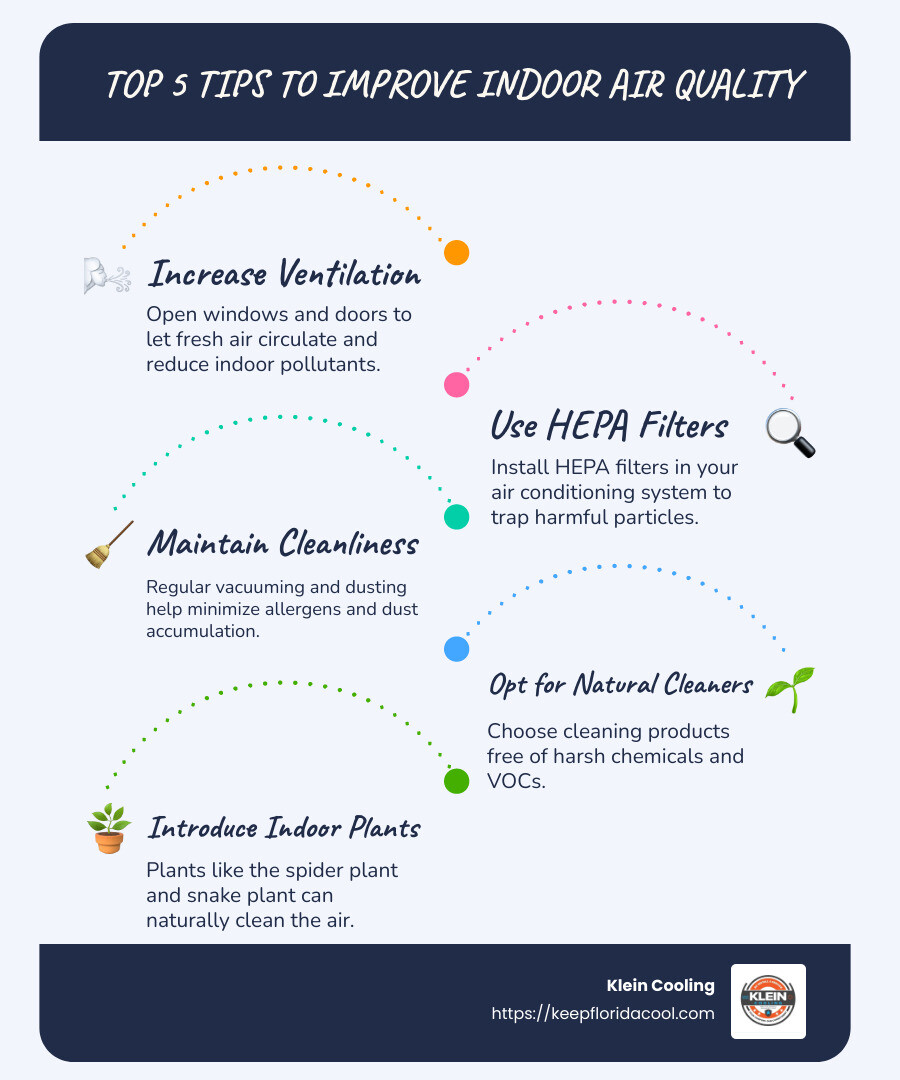
Letting fresh air in is one of the simplest ways to improve indoor air quality. When outdoor air quality is good, open your windows to allow fresh air to circulate. This helps dilute indoor pollutants.
2. Use HEPA Filters
High-Efficiency Particulate Air (HEPA) filters are great at capturing small particles like dust and pollen. Use them in your vacuum cleaner and air purifiers to reduce airborne contaminants.
3. Maintain a Smoke-Free Home
Smoking indoors releases harmful chemicals into the air. Keep your home smoke-free to protect your indoor air. Encourage smokers to go outside to light up.
4. Choose Natural Cleaning Products
Chemical cleaning products can release VOCs, which are harmful to breathe. Opt for natural or low-VOC cleaning products to keep the air cleaner.
5. Vacuum Regularly
Regular vacuuming helps remove dust and allergens from carpets and floors. Use a vacuum with a HEPA filter to ensure small particles are captured.
6. Take Care of Bedding
Dust mites love bedding. Wash sheets, pillowcases, and mattress covers in hot water weekly to keep these allergens at bay.
7. Grow Indoor Plants
Certain plants, like spider plants and English ivy, can naturally filter air. Place these plants around your home to help absorb pollutants.
8. Control Humidity
High humidity can lead to mold growth. Use dehumidifiers to keep humidity levels between 30-50%. This helps prevent mold and dust mites.
9. Use an Air Quality Monitor
Keep track of your indoor air quality with a monitor. These devices can alert you to changes in air quality, so you can take action when needed.
10. Avoid Burning Indoors
Burning candles, wood, or using gas appliances can release harmful particles. Avoid these activities indoors or ensure proper ventilation if necessary.
By incorporating these practices, you can significantly improve indoor air quality in your home. Each step contributes to a healthier living environment. Next, we’ll address some common questions about indoor air quality.
Frequently Asked Questions about Indoor Air Quality
What are the symptoms of poor indoor air quality?
Poor indoor air quality can cause a range of symptoms. Headaches, fatigue, and irritation of the eyes, nose, and throat are common. You might also experience coughing or difficulty breathing. If these symptoms occur mainly when you’re at home, it could be a sign of indoor air pollution.
Do air purifiers improve air quality?
Yes, portable air cleaners and HVAC filters can significantly improve indoor air quality. Portable air purifiers work by trapping airborne particles like dust and pollen. They’re especially useful in rooms with limited ventilation. Make sure to choose a model with a HEPA filter for the best results. Similarly, regularly changing the filters in your HVAC system helps maintain clean air throughout your home.
How can I improve indoor air quality naturally?
You can improve indoor air quality naturally in several ways. Natural ventilation is key: open windows and doors to let fresh air circulate when outdoor air quality is good. Houseplants like spider plants and English ivy can also help. These plants naturally filter and purify the air, reducing pollutants. Just be careful not to overwater them, as damp soil can promote mold growth.
Conclusion
In our journey to improve indoor air quality, we’ve explored various strategies and practices that can make our homes healthier and more comfortable. From understanding the causes of indoor pollution to adopting effective solutions like source control and ventilation, every step we take contributes to a cleaner living environment.
At Klein Cooling, we are committed to helping you breathe easier. Our expert HVAC services in Palm Coast, FL, are designed with your comfort and health in mind. As a family-owned business, we combine honesty and integrity with professional HVAC solutions, ensuring that your indoor air quality is at its best.
Whether it’s installing advanced air purification systems or providing thorough duct cleaning, we have the expertise to tackle air quality challenges head-on. Our services are custom to meet the unique needs of each home, ensuring that you enjoy a fresh and inviting atmosphere all year round.
Ready to take the next step towards a healthier home? Find how our HVAC solutions can make a difference. Explore our additional services and find out how we can help you achieve optimal indoor air quality today.
Thank you for trusting Klein Cooling with your indoor comfort needs. Together, let’s create a home environment where fresh air and family values thrive.